
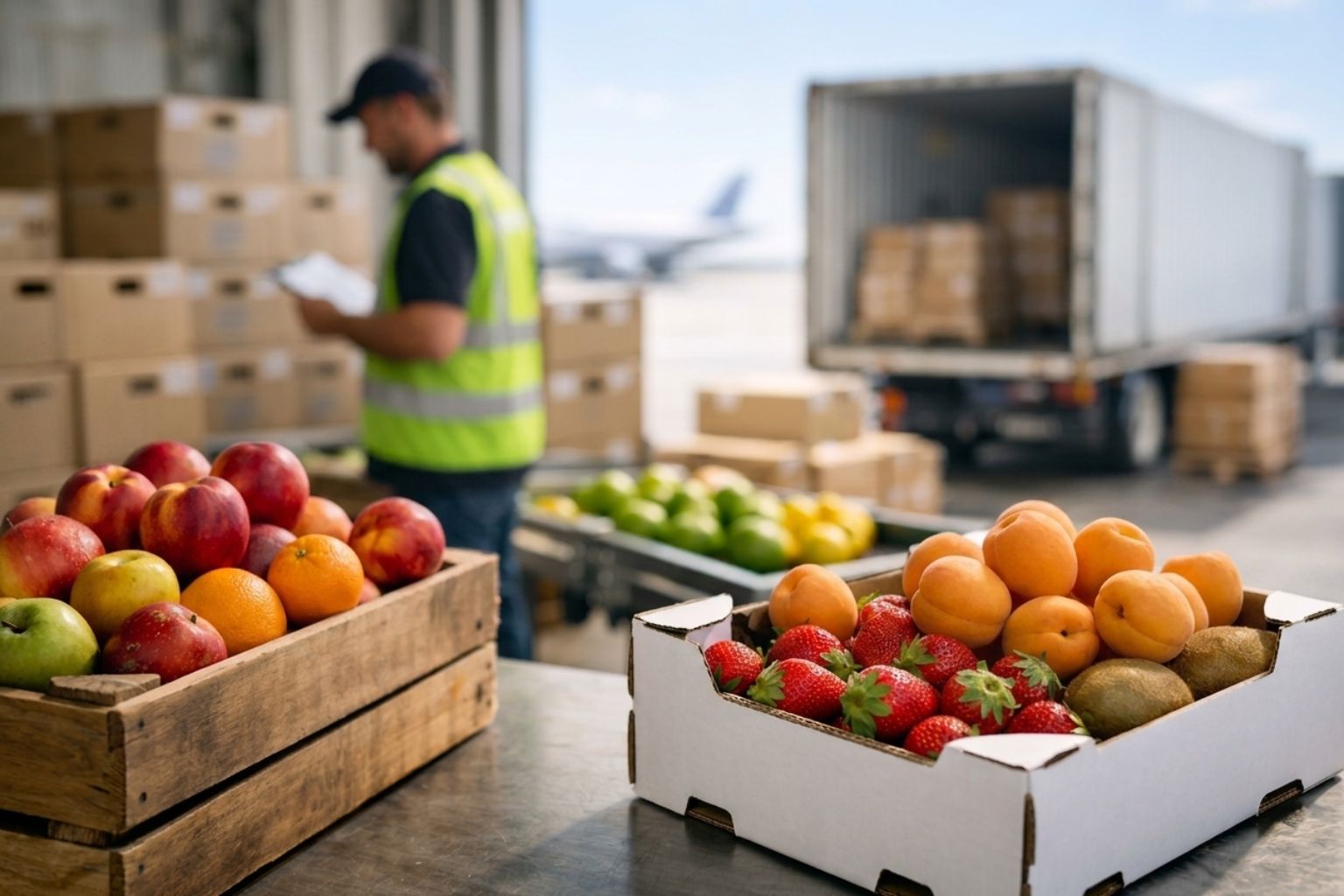
A fruit shipment can look excellent at loading and still fail at destination. For importers, wholesalers, and retail buyers, that gap is where margin is lost. When asking what makes fruit export ready, the real answer is not appearance alone. It is the ability of each lot to maintain quality, specification, and commercial value from orchard to final delivery.
For B2B buyers, export readiness is a risk-management question as much as a quality question. Fruit must arrive with the right firmness, color, sizing, packaging integrity, and shelf-life potential for the target market. That means export-ready fruit is the result of disciplined decisions made before harvest, during sorting, and throughout transport.
What makes fruit export ready in commercial terms
In practical terms, export-ready fruit is fruit that can travel, clear inspection, meet buyer specifications, and perform well on arrival. It must be consistent within the lot, supported by traceability, and packed for the route it will actually take - not the route everyone hopes it will take.
This is where many suppliers are separated. A domestic-grade lot may be attractive and fresh, but export programs demand more. Tolerance for inconsistency is lower, transit times are longer, and the cost of a claim is significantly higher. A fruit lot is export ready only when product quality and supply chain discipline are aligned.
Field selection comes first
Export quality starts in the field, not at the packing line. Variety selection, orchard practices, harvest timing, and grower discipline all shape whether fruit can withstand transport and still deliver premium presentation.
Not every orchard block is suitable for every market. Some fruit may have excellent eating quality but limited travel tolerance. Other lots may hold firmness well but need tighter color management for retail programs. Knowing the destination matters. A nearby regional market and a long-haul export market do not ask the same thing from the fruit.
The strongest export programs begin with selected growers and clearly defined harvest criteria. Maturity must be measured carefully. Fruit harvested too early may lack flavor and market acceptance. Fruit harvested too late may arrive soft, bruised, or with reduced shelf life. Export readiness depends on finding the commercial balance between ripeness and endurance.
Maturity is not the same as readiness
This distinction matters. A fruit can be biologically mature but still not suitable for export shipment. The target market, transit duration, and retail handling all influence the ideal harvest window. Cherries, apricots, nectarines, kiwifruit, strawberries, and citrus each require different thresholds for firmness, sugar development, skin condition, and post-harvest behavior.
That is why serious exporters work with crop-specific standards rather than a one-size-fits-all approach. Export readiness is product-specific, market-specific, and timing-specific.
Sorting and grading define commercial reliability
Once fruit leaves the field, selection becomes even more critical. Export buyers do not simply buy fruit. They buy a specification. Size range, color uniformity, shape, skin finish, and defect tolerance all affect the usability of a shipment.
A premium lot must be graded with discipline. Mixed sizing, inconsistent color, pressure damage, minor skin defects, or variable maturity may appear manageable at origin, but they become expensive problems after transit. For wholesalers and retailers, uniformity is not cosmetic. It supports pricing, merchandising, replenishment, and customer confidence.
This is where strict sorting adds measurable value. A well-graded lot protects the buyer from hidden variability. It also protects the shipper, because claims often begin with inconsistency rather than a single major defect.
What buyers usually expect from an export lot
Professional buyers typically evaluate an export lot across several performance points: visual presentation, internal quality, lot uniformity, pack accuracy, labeling, and expected shelf life. If one of these fails, the commercial performance of the entire shipment can weaken.
The trade-off is straightforward. Tighter grading reduces packout volume, but it raises confidence and lowers downstream risk. For export business, that is usually the right decision.
Packaging must protect quality, not just present it
Packaging is often misunderstood as a branding or presentation tool. In export trade, its first job is protection. Cartons, trays, punnets, liners, ventilation design, and pallet configuration all influence whether fruit arrives in the intended condition.
The correct packaging depends on the fruit and the route. Soft fruit requires different support than citrus or apples. A market with fast turnover may accept a different pack style than a retailer needing longer display performance. Even small packaging choices can affect airflow, pressure tolerance, condensation risk, and handling efficiency.
An export-ready fruit program uses packaging that matches product sensitivity and logistics reality. If packaging is too weak, quality suffers during movement. If ventilation is poor, temperature control becomes less effective. If palletization is inconsistent, handling damage increases. Premium fruit needs packaging standards equal to the product itself.
Cold chain discipline is non-negotiable
If there is one factor that turns good fruit into export-ready fruit, it is temperature control. A strong cold chain preserves firmness, slows deterioration, and protects shelf life. A weak cold chain undermines even the best field and packing work.
Pre-cooling must happen promptly and correctly. Storage conditions must fit the fruit type. Loading must maintain temperature integrity, and transport must be monitored with discipline. Small breaks in the cold chain can accelerate softening, dehydration, decay, or color change.
For buyers, this matters because many arrival issues do not begin at destination. They begin with temperature variation earlier in the chain. Export readiness therefore includes not only product quality, but the operational ability to maintain that quality without interruption.
Transit time changes the standard
The longer the route, the stricter the requirements. Fruit heading to a nearby market may tolerate a different maturity profile than fruit traveling across multiple borders or through congested ports. Export readiness is never judged in isolation from transit conditions.
This is why serious suppliers match fruit selection and packing decisions to the expected journey. Shelf-life planning is part of shipment planning.
Traceability and compliance protect the transaction
For professional importers and retailers, traceability is not an extra. It is a core requirement. Export-ready fruit must be linked to its origin, grower, lot, packing date, and handling history. This supports food safety, quality control, and claim resolution if needed.
Compliance with buyer specifications and international standards also matters. Residue management, labeling accuracy, phytosanitary documentation, and pack consistency all affect whether a shipment can move smoothly through trade channels. The commercial value of a lot depends not only on how it looks, but on whether the paperwork and controls behind it are equally reliable.
When traceability is strong, confidence increases on both sides. Buyers reduce exposure. Suppliers protect their reputation. Long-term business is built on that foundation.
Consistency is what makes fruit truly export ready
One excellent pallet does not make an export program. What makes fruit export ready at a professional level is repeatability. Buyers need to know that the next shipment will match the previous one in quality, specification, and timing.
This is especially important for chains, distributors, and structured wholesale programs. Their customers buy against expectation. If quality varies sharply from load to load, planning becomes harder and commercial trust weakens.
Consistency requires control across the full value chain - grower selection, harvest timing, quality checks, packing standards, storage, and delivery coordination. That is why companies with real export depth invest in process, not only product. At ELYSIAN FRUIT, this logic shapes how premium Greek fruit is prepared for international markets: selected production, strict grading, traceability, and safe transport working together rather than separately.
Export readiness is different for every fruit category
A final point matters for serious buyers: export readiness is never generic. Cherries require exceptional firmness and careful handling. Apricots and nectarines demand close maturity management. Kiwifruit depends heavily on storage behavior and pressure control. Strawberries leave almost no room for temperature error. Apples and citrus may offer longer windows, but they still depend on correct grading, packing, and lot consistency.
So the right question is not simply what makes fruit export ready. It is what makes this fruit, for this market, on this route, commercially ready to arrive and sell well. That is where expertise shows.
The suppliers worth building with are the ones who treat export readiness as a system. When field selection, quality control, packaging, traceability, and cold chain discipline all work together, fruit does more than travel. It arrives with its value intact.





Comments