
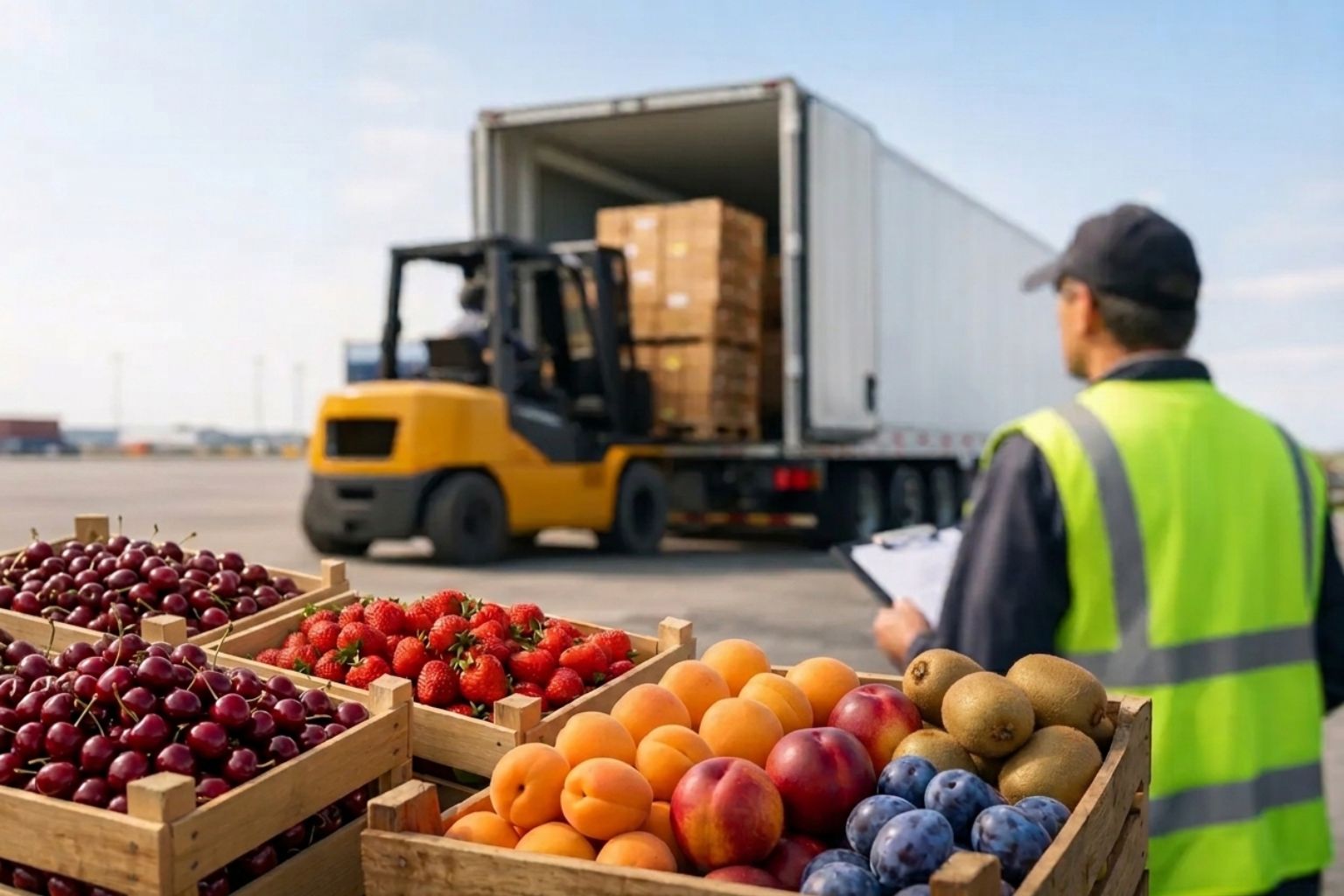
A shipment can be lost long before it misses a port window. In fresh fruit trade, problems usually begin earlier - at harvest timing, in field selection, during grading, or in temperature handling within the first few hours. That is why any serious guide to fresh produce export has to start with control, not paperwork.
For importers, distributors, wholesalers, and retail buyers, export success is measured in arrival condition, shelf life, pack consistency, and claim rate. Price matters, but price without discipline creates risk. In premium fruit exports, the supplier’s real value is the ability to protect quality from origin to final delivery.
What a guide to fresh produce export should actually cover
Fresh produce export is not a single transaction. It is a chain of decisions that affect commercial performance at destination. The product may look strong at loading, yet still underperform if maturity was wrong, sizing was inconsistent, packaging was not market-fit, or cold chain discipline was weak.
A useful export framework combines five elements: suitable origin, careful harvest planning, strict sorting and standardization, compliant documentation, and reliable logistics. If one of these fails, the rest cannot fully compensate. A strong exporter understands that freshness is not only a product characteristic. It is the result of process control.
This is especially true for categories such as cherries, apricots, peaches, nectarines, strawberries, kiwifruit, apples, oranges, persimmons, plums, and chestnuts. Each product has a different tolerance for transit time, handling pressure, and temperature variation. Export strategy should follow the fruit, not force the fruit into a generic shipping model.
Start with product-market fit, not just product availability
One of the most common mistakes in produce export is assuming that available volume is enough to support an international program. It is not. The right question is whether the fruit matches the destination market’s commercial expectations.
That includes size range, color development, firmness, sugar levels, packaging format, labeling, pallet configuration, and acceptable tolerance levels. A wholesale market may absorb wider variation if pricing is aligned. A supermarket chain usually will not. A foodservice buyer may prioritize functional performance and delivery rhythm over cosmetic perfection. Export planning has to reflect those realities.
This is where experienced supplier selection matters. Export-grade fruit begins in the orchard, with chosen varieties, disciplined cultivation, and growers who can follow harvest instructions consistently. If the raw material base is unstable, later controls become expensive and less effective.
Harvest timing defines export potential
For fresh fruit, the harvest window is commercial strategy in action. Picking too early may improve transit tolerance, but it can compromise flavor, eating quality, and repeat sales. Picking too late may improve immediate appearance or Brix, but reduce shelf life and increase claims.
The right balance depends on fruit type, destination, route duration, and buyer profile. Air shipments allow more maturity but raise cost. Road and sea programs require tighter technical discipline. A short-haul market can accept fruit with different characteristics than a long-haul market with multiple distribution steps after arrival.
Professional exporters rely on maturity checks, field monitoring, and harvest segmentation rather than broad assumptions. They separate blocks, varieties, and picking dates carefully. That approach protects consistency within each lot, which matters greatly for B2B buyers who need predictable performance rather than occasional excellence.
Grading, standardization, and pack consistency
In export, quality is not only about high standards. It is also about repeatable standards. Buyers need confidence that one pallet matches the next, and one shipment reflects the agreed specification.
That makes grading and standardization central to export performance. Size uniformity, color sorting, defect control, firmness checks, and packaging accuracy all affect how fruit will be received and marketed. When a supplier packs mixed quality under one label, the issue is not simply aesthetics. It creates downstream cost for the buyer through slower turnover, more waste, and weaker consumer trust.
Premium positioning depends on credible discipline. The most reliable exporters treat packinghouses as quality control centers, not just throughput facilities. Every stage should support traceability, batch accuracy, and product integrity. For demanding international buyers, this is often the difference between a trial order and a long-term program.
Cold chain is where export promises are tested
Many export claims come down to temperature abuse. Even excellent fruit can deteriorate quickly if pre-cooling is delayed, loading conditions are poor, or transport temperatures fluctuate. The cold chain is not a technical detail. It is the operating core of fresh produce export.
The required temperature and humidity profile varies by commodity. Some fruits are highly sensitive to chilling, while others need aggressive cooling to preserve firmness and reduce respiration. Packaging ventilation also plays a role. A carton that protects appearance but restricts airflow may create another problem during transit.
This is why logistics decisions should be made alongside quality teams, not separately. Route planning, transit time, reefer settings, pallet build, and loading speed all influence delivered quality. Fast movement is helpful, but controlled movement is what protects value.
Packaging must fit the market and the journey
Packaging in export has two jobs. It must protect the fruit physically, and it must serve the buyer’s commercial model. Those goals overlap, but not always perfectly.
Retail-ready packaging may improve presentation and reduce repacking labor, but it can increase material cost and limit flexibility. Bulk formats may suit wholesale channels better, yet they require confidence in downstream handling. Smaller packs may support premium positioning, while larger formats may be more efficient for certain market segments.
Good exporters do not treat packaging as an afterthought. They align pack style with fruit sensitivity, transit conditions, buyer expectations, and local market practice. Labeling accuracy is equally important. Carton marks, origin details, lot coding, and traceability references need to be clear and consistent. In international trade, packaging errors can create customs delays, confusion in distribution centers, or avoidable disputes at destination.
Compliance and documentation reduce risk
Export documentation rarely creates value on its own, but poor documentation can destroy it quickly. Phytosanitary requirements, certificates of origin, commercial invoices, packing lists, customs declarations, and buyer-specific specifications all need to be accurate and aligned.
Requirements vary by country and by commodity. Some markets apply very specific residue, labeling, or treatment rules. Others focus heavily on import protocols and border inspection compliance. A capable exporter stays ahead of these requirements instead of reacting after shipment preparation has begun.
This is also where traceability matters commercially, not only legally. When a buyer asks for lot history, harvest information, treatment records, or packing date confirmation, the supplier should be able to respond clearly and quickly. Traceability builds trust because it shows process ownership.
Supply reliability matters as much as product quality
A buyer may accept an occasional market-driven size variation. What is harder to absorb is inconsistency in supply planning. Promotional activity, shelf planning, and customer commitments depend on dependable arrivals.
That is why export readiness should include volume forecasting, harvest sequencing, contingency planning, and realistic communication. Overpromising is one of the fastest ways to damage a commercial relationship. Reliable exporters know when to commit, when to limit exposure, and when to adjust packouts to preserve program continuity.
For many B2B buyers, the ideal supplier is not the one who promises everything. It is the one who communicates early, delivers to spec, and handles issues with speed and accountability. In fresh produce, professionalism often shows most clearly when conditions are difficult.
The role of origin in premium fruit exports
Origin still matters in global produce trade, especially when it is paired with process discipline. Greek fruit, for example, carries strong market potential because it combines favorable growing conditions with access to selected varieties and established export channels. But origin alone is not enough to sustain premium positioning.
Premium value is built when origin is supported by careful producer selection, disciplined packing, international standards, and secure transport. That is the model followed by companies such as ELYSIAN FRUIT, where the focus is not simply on moving fruit abroad, but on protecting freshness, traceability, and commercial reliability throughout the chain.
For professional buyers, this distinction is important. A product can be attractive at source and still become risky in execution. Strong export partners close that gap.
A practical way to evaluate an export supplier
If you are sourcing fresh produce internationally, the right questions are straightforward. Can the supplier define its quality specifications clearly? Can it standardize lots consistently? Does it control or closely manage grower selection? How strong is its cold chain discipline? Can it adapt packs and shipping models to your market? And when something changes, does it communicate in time for you to act?
The best export relationships are built on aligned expectations and measurable performance. Not every shipment needs the same solution. A short-season cherry program, a retail peach line, and a long-haul kiwifruit order each require different decisions. What matters is the supplier’s ability to make those decisions with precision.
Fresh produce export rewards detail, speed, and discipline in equal measure. When those elements are present from the field to final delivery, premium fruit travels with purpose - and arrives with value still intact.
The strongest export programs are not built around one good load. They are built around a repeatable standard that buyers can trust season after season.







Comments