
A late truck, mixed sizing, and unclear origin can turn a profitable fruit program into a costly problem within hours. That is why the distinction in a greek fruit supplier vs trader decision matters far beyond price. For importers, wholesalers, retail chains, and foodservice buyers, the real question is not simply who can quote faster. It is who can protect product quality, delivery consistency, and commercial confidence from harvest to final destination.
In the fresh produce trade, the terms supplier and trader are often used as if they mean the same thing. In practice, they can represent very different operating models. Understanding that difference helps buyers reduce risk, secure more consistent fruit, and build stronger long-term supply relationships.
What a Greek fruit supplier vs trader really means
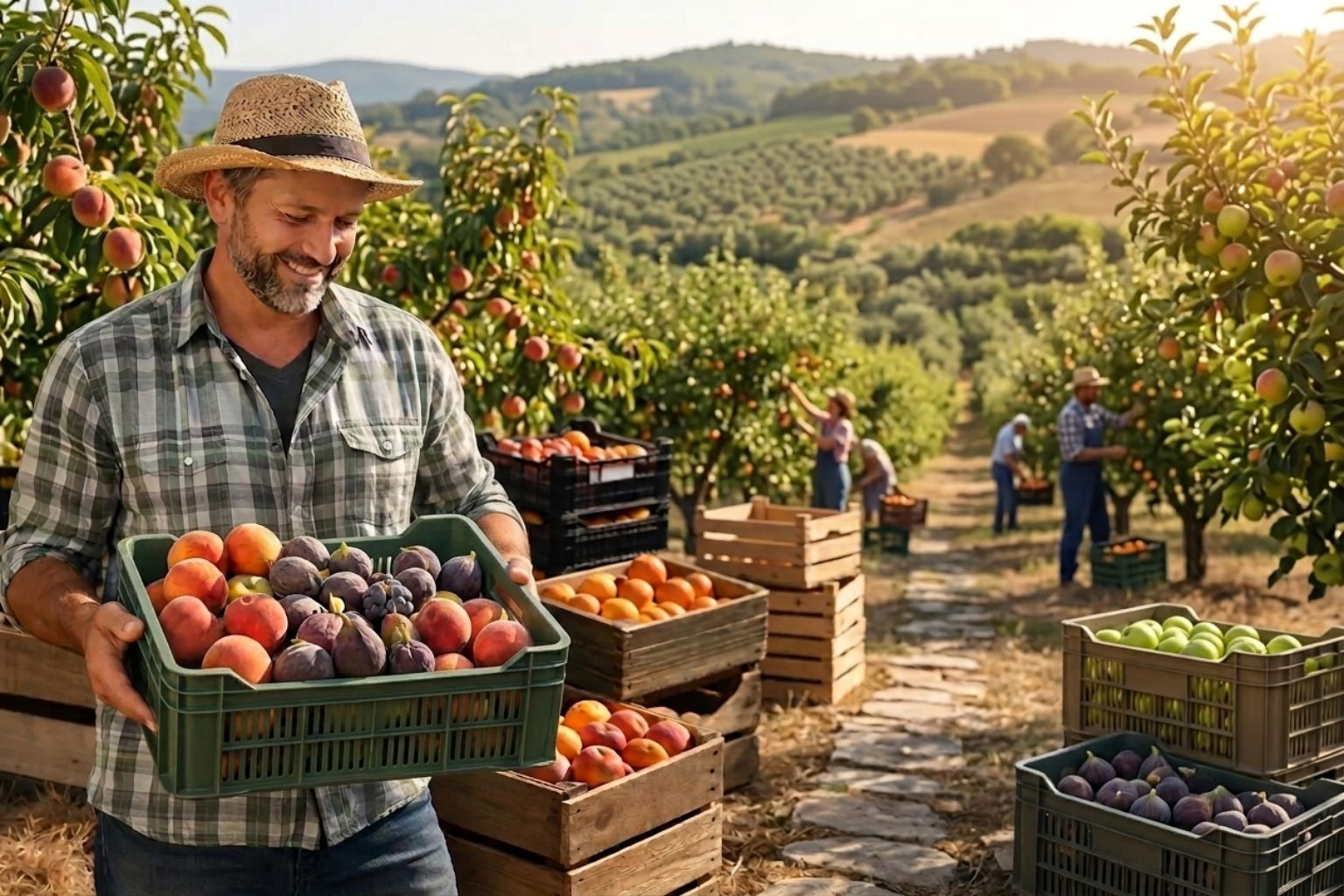
A Greek fruit supplier typically has a closer connection to production, packing, quality control, and logistics execution. That may include owned production, structured partnerships with selected growers, in-house sorting, standardized packing, and tighter oversight across the supply chain. The supplier is usually positioned to manage the fruit from orchard level to shipment with a clearer line of responsibility.
A trader, by contrast, often operates primarily as a commercial intermediary. A trader may source fruit from different growers, packing houses, or local market channels based on availability and price. This model can be useful in certain buying situations, especially when speed, opportunistic sourcing, or broad market access matters most. But it does not always offer the same degree of operational control.
That distinction is especially relevant with fresh fruit, where shelf life is short and quality can change quickly. Cherries, apricots, nectarines, peaches, strawberries, persimmons, kiwis, and citrus all require precise handling. When fruit moves through too many hands without clear accountability, claims and losses become more likely.
Why the operating model matters in B2B buying
Professional buyers do not purchase fruit as a generic commodity. They purchase a sales window, a specification, a margin expectation, and a service commitment. A supplier-based model usually aligns better with those requirements because it supports consistency rather than one-off transactions.
If your business serves retail programs, wholesale distribution, or contract supply, consistency often matters more than chasing the lowest offer in a given week. A supplier with organized sourcing and packing can deliver more predictable sizing, more stable quality, and clearer product documentation. That creates fewer surprises at arrival and fewer disputes downstream.
A trader may still offer value when the market is tight or when a buyer needs quick access to spot volumes. However, the trade-off can be less visibility into how fruit was selected, packed, pre-cooled, or consolidated before loading. For some buyers, that trade-off is acceptable. For others, especially those supplying premium channels, it adds avoidable risk.
Quality control is where the difference becomes visible
The strongest difference in a Greek fruit supplier vs trader comparison often appears in quality management. Fresh fruit quality is not decided only at dispatch. It is shaped earlier - in orchard selection, harvest timing, handling discipline, sorting criteria, and packing standards.
A supplier with a structured production and packing network can apply quality control at multiple stages. That means selecting growers against clear standards, checking maturity and condition at intake, sorting fruit for uniformity, and packing according to agreed specifications. This is how premium quality becomes repeatable rather than accidental.
A trader may buy correctly packed fruit from reputable sources, but quality oversight is often more dependent on the upstream partner. If the trader does not control or closely supervise those stages, the final result may vary from lot to lot. That variation can affect appearance, firmness, Brix, size distribution, and shelf life.
For B2B buyers, this is not a technical detail. It affects claims, shrink, customer satisfaction, and brand reputation in the destination market.
Traceability and accountability
Traceability is no longer optional in serious fresh produce trade. It supports food safety, claim management, and buyer confidence. A supplier with direct sourcing and organized operations can usually provide stronger lot traceability and more complete documentation. That creates a clearer chain from grower to packhouse to shipment.
With a trader-led model, traceability may still exist, but the documentation path can be less direct if product is assembled from multiple external sources. The issue is not whether traders can provide paperwork. The issue is how fast and how precisely they can isolate a lot, explain a deviation, and respond when something needs investigation.
For importers and retailers, that speed matters.
Price is only one part of the cost
Many buyers begin by comparing offers on price per kilogram or carton. That is understandable, but incomplete. In fresh fruit, the better commercial question is total delivered value.
A trader may occasionally offer a lower market price, especially when sourcing opportunistically. But if the fruit arrives with inconsistent grading, higher waste, or weaker shelf life, the initial savings can disappear quickly. A cheaper purchase that creates rejections, markdowns, or customer complaints is not a better buy.
A supplier model can sometimes appear firmer on price because it reflects more structured quality control, packing discipline, and logistics coordination. Yet that same structure often reduces the hidden costs buyers face after arrival. Better uniformity, stronger traceability, and dependable execution usually support a healthier net result.
For premium programs, promotional planning, and repeat business, the most competitive supplier is often the one who protects margin, not just the one who cuts the opening quote.
Logistics, freshness, and arrival performance
Freshness is a commercial asset only when it survives the journey. In export markets, fruit must move under disciplined timing, temperature management, and packaging conditions. This is another area where supplier capability matters.
A Greek fruit supplier with operational control is typically better positioned to coordinate harvest timing with packing and loading schedules. That shortens delays between picking and shipment, helps preserve freshness, and supports more stable arrival condition. It also improves communication around loading plans, transit expectations, and product readiness.
A trader may rely on third-party readiness and external packing timelines. That does not automatically mean poor performance, but it can reduce control over critical details. When schedules tighten during peak season, that gap becomes more visible.
For buyers managing international arrivals, the difference between a well-coordinated loading plan and a loosely assembled shipment is significant.
When a trader may still be the right fit
This is not a case of one model always being right. It depends on the buying objective.
A trader can be useful when a buyer needs flexible spot sourcing, mixed origin options, or quick access to available volume outside a structured seasonal program. Experienced traders may also know how to navigate market imbalances and locate product efficiently during supply gaps.
But if your priorities include premium presentation, batch consistency, traceability, secure packing standards, and long-term planning, a supplier-led model is usually the stronger fit. The more demanding the end customer, the more important that distinction becomes.
How to assess a partner beyond the sales pitch
The most effective way to evaluate a potential partner is to look at control points, not just claims. Ask how fruit is sourced, who manages sorting and packing, how specifications are enforced, and what level of traceability is available per lot. Ask how arrival issues are handled and who owns responsibility when product does not meet the agreed standard.
Buyers should also look at whether the company is built for long-term execution or short-term trading opportunities. Those are different commercial mindsets. One prioritizes consistency and reputation across seasons. The other may be more transaction-driven.
For many international buyers, the ideal partner is one that combines production access, selected grower relationships, strict sorting, standardized packing, and export discipline. That model creates confidence because it narrows the distance between the orchard and the final customer.
Choosing for reliability, not just availability
In the end, the Greek fruit supplier vs trader decision is about commercial control. It shapes product consistency, traceability, freshness, claim exposure, and the strength of your downstream customer relationships.
For buyers who need dependable Greek fruit for wholesale and export channels, the safest choice is often a partner that manages quality at every stage, from field selection to final delivery. That is where premium fruit stops being a promise and becomes a repeatable business result. Companies such as ELYSIAN FRUIT reflect this model by combining production insight, strict quality standards, and export-ready execution for demanding B2B markets.
The right partner should make your buying program easier to defend, easier to scale, and easier to trust when the market gets difficult.





Comments