
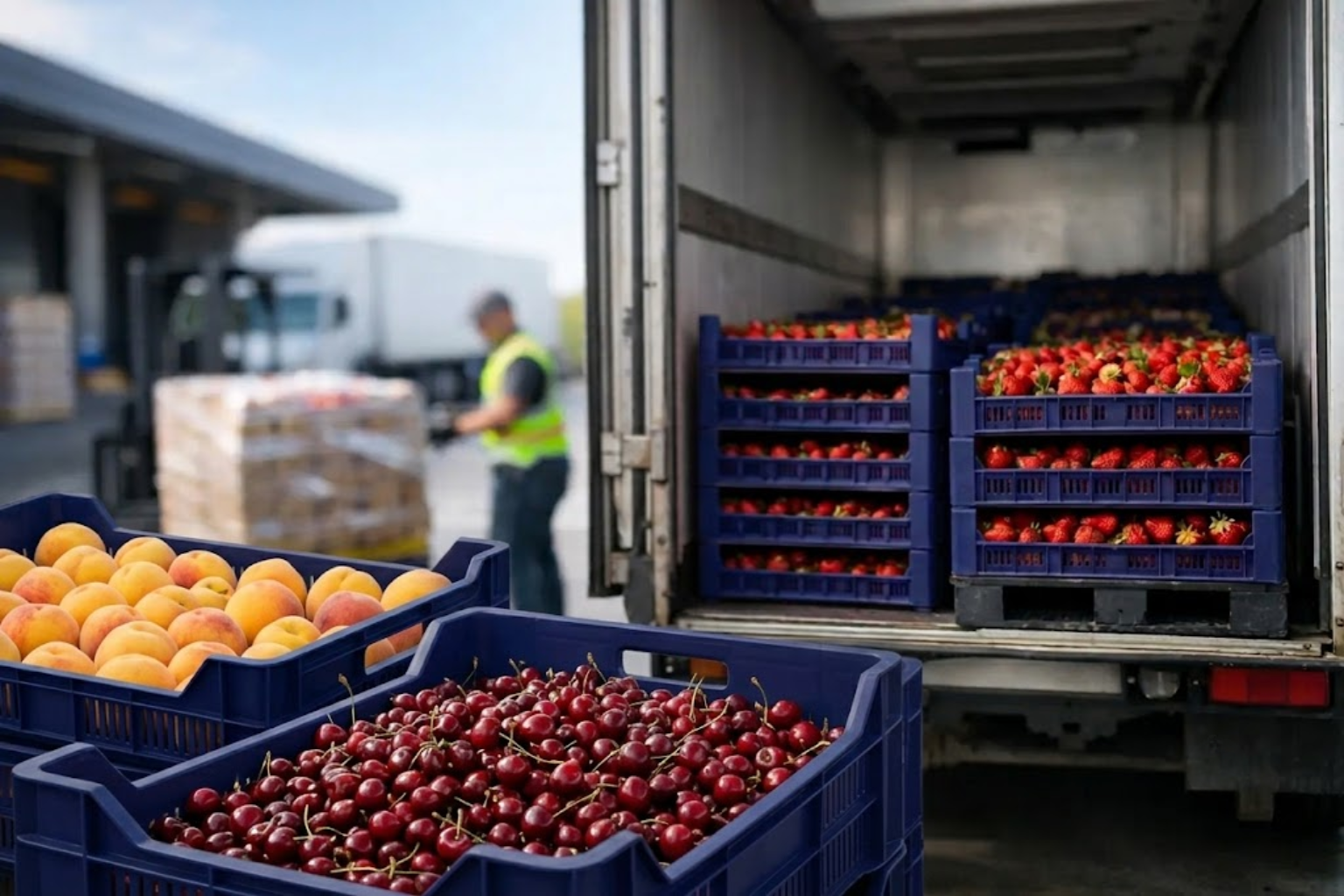
A rejected pallet rarely fails for one reason. More often, spoilage starts as a small deviation at harvest, grows during handling, and becomes visible only when the fruit reaches a distribution center or retail shelf. That is why knowing how to reduce fruit spoilage is not a narrow storage question. For professional buyers, it is a full-chain discipline that affects claims, margin, shelf life, and brand reputation.
In wholesale and export environments, fruit spoilage is not just about decay. It also includes softening, dehydration, bruising, color inconsistency, internal breakdown, stem browning, pressure damage, and loss of eating quality. A shipment may arrive looking commercially acceptable, yet still underperform within 24 to 48 hours. For importers, distributors, and retail buyers, that gap between arrival quality and sell-through quality is where risk becomes cost.
How to reduce fruit spoilage starts before packing
The most effective interventions happen before fruit enters the packing line. Field decisions shape postharvest behavior more than many buyers realize. Variety selection, orchard management, maturity stage, and harvest timing all influence how fruit tolerates sorting, cooling, transport, and shelf exposure.
Fruit harvested too early may travel well but fail on flavor and finish. Fruit harvested too late may present excellent eating quality at origin, yet lose firmness too quickly in transit. The correct picking window depends on the product, destination, transit time, and intended market channel. A domestic wholesale program and a long-haul export program should not follow the same maturity profile.
This is where disciplined grower selection matters. Consistency is stronger when production is aligned with clear specifications rather than opportunistic supply. Brix, firmness, skin condition, size uniformity, and dry matter are not technical details for paperwork. They are practical indicators of how a lot is likely to perform after dispatch.
Handling damage often looks like spoilage later
Many spoilage claims are actually handling claims that reveal themselves later. A fruit can be packed without visible defects and still develop bruising, pitting, or soft breakdown after transport. Stone fruit, strawberries, persimmons, and kiwifruit all respond differently to impact, compression, and vibration, but the pattern is similar - poor handling shortens marketable life.
The solution is not simply to "handle with care." It requires a controlled process. Harvest crews need clear field bins, clean tools, and disciplined picking methods. Drop heights should be minimized. Filled containers should not remain in the sun longer than necessary. Delays between harvest and pre-cooling create a compounding effect, especially in warm conditions.
For B2B buyers, this matters because spoilage prevention is won in hours, not days. If field heat remains in the fruit too long, respiration rises, moisture loss accelerates, and the cold chain begins from a disadvantage. Even premium-looking fruit can age too quickly when those first postharvest hours are poorly managed.
Temperature control is the core answer to how to reduce fruit spoilage
If there is one area where operational discipline delivers the clearest return, it is temperature management. Cold chain control is the backbone of any serious strategy for how to reduce fruit spoilage. Once target pulp temperature is missed, every next stage becomes more difficult.
Different fruits require different temperature bands, and there is no universal setting that suits mixed products. Cherries and strawberries demand rapid cooling and tight temperature control. Peaches, nectarines, apricots, and plums need careful balancing of firmness retention and chilling sensitivity. Citrus and persimmons have different tolerances again. The wrong temperature may not create visible damage immediately, but it can accelerate deterioration downstream.
Equally important is temperature stability. A shipment that fluctuates repeatedly between cold storage, loading bays, customs delays, and final distribution can lose shelf life even if the average reading looks acceptable. Condensation, microbial activity, and textural decline often follow these fluctuations.
For that reason, serious operators monitor more than room temperature. They track pulp temperature, loading conditions, reefer performance, and handoff timing. Data logging and lot-based traceability help identify where breakdown starts. Without that visibility, spoilage remains a recurring cost without a clear source.
Packaging should protect quality, not just present it
Packaging is often discussed as a commercial tool, but in fresh fruit logistics it is first a protection system. Good packaging preserves structure, ventilation, and hygiene from packhouse to final destination. Weak packaging does the opposite. It turns movement into damage and condensation into risk.
The right format depends on the fruit, route, and customer program. High-respiration fruit may require stronger airflow design. Delicate fruit may need packaging that limits movement and pressure points. Export programs typically need a different packaging logic than local distribution because transit duration and handling intensity are not the same.
There is also a trade-off. Tighter presentation can improve appearance but reduce airflow if poorly designed. Extra layers can protect against impact but increase compression if pallet configuration is wrong. Premium quality is not only about visual finish. It is about selecting packaging that supports freshness under real logistics conditions.
Cleanliness is another non-negotiable factor. Sanitized packing areas, controlled wash systems where relevant, and clean food-contact materials reduce contamination risk. Fruit does not need a dramatic incident to spoil faster. Small hygiene failures can shorten storage life enough to create a claim at destination.
Sorting and grading protect the entire shipment
One weak lot can affect the commercial value of an otherwise strong shipment. That is why strict sorting is not cosmetic. It is a loss-prevention measure. Fruit with cuts, bruises, skin breaks, overmaturity, decay signs, or abnormal softness should not move into export-grade packing simply because external color is attractive.
Uniformity matters for a practical reason. When mixed maturity or mixed firmness is packed together, the lot behaves unevenly during transport and shelf display. Some units may be ready, while others deteriorate too fast or remain below eating quality. For retail and wholesale programs alike, that inconsistency increases shrink and complicates replenishment planning.
Professional grading aligned with international standards helps reduce that risk. It creates clearer expectations between shipper and buyer, and it supports more reliable arrival performance. In premium supply, grading is not only about what is accepted. It is about what is deliberately excluded.
Transit planning matters as much as storage conditions
Spoilage does not occur only inside the cold room. Route design, loading sequence, transit duration, border timing, and final delivery coordination all influence fruit condition on arrival. A strong packhouse program can still lose value if transport planning is weak.
Fast turnover is usually positive, but speed without control is not enough. The priority is predictable movement. A fruit program with stable departure windows, pre-booked transport capacity, and clear destination handling protocols will usually outperform a rushed program built around last-minute decisions.
Mixed loads also require attention. Some products are more ethylene-sensitive, some release more moisture, and some tolerate stacking pressure differently. Combining fruits for efficiency can be commercially logical, but only when compatibility is properly assessed. Otherwise, what saves cost per pallet may create quality loss per case.
Traceability turns spoilage from guesswork into action
When spoilage happens repeatedly, many businesses respond with tighter claims language. That may protect transactions, but it does not solve the operational problem. Traceability does.
Lot identification, harvest records, quality checks, temperature logs, and pack dates make it possible to isolate patterns. If one orchard block underperforms, that should be visible. If one route experiences repeated temperature deviation, that should be measurable. If one packaging format consistently leads to pressure damage, the evidence should be available.
For B2B buyers, traceability is not just a food safety requirement. It is a commercial safeguard. It reduces uncertainty, supports faster corrective action, and strengthens long-term supply reliability. In premium fresh fruit trade, confidence is built when every lot can be followed with precision.
A practical standard for reducing spoilage across the chain
The strongest answer to how to reduce fruit spoilage is not a single tool or isolated inspection. It is alignment across production, harvest, cooling, sorting, packaging, transport, and delivery. Each stage either protects shelf life or quietly removes part of it.
That is why experienced buyers increasingly look beyond price and appearance at origin. They assess whether the supplier can hold quality under real commercial conditions. A partner with disciplined grower selection, strict sorting, international-standard packing, cold chain control, and full traceability offers more than fresh fruit. They reduce avoidable risk.
For companies serving demanding wholesale and export markets, spoilage control is a daily proof of professionalism. Every crate that arrives with firmness, freshness, and consistency intact supports stronger business on both sides of the transaction. That is where long-term value is created - not by reacting to losses, but by designing them out of the chain from the start.



Comments