
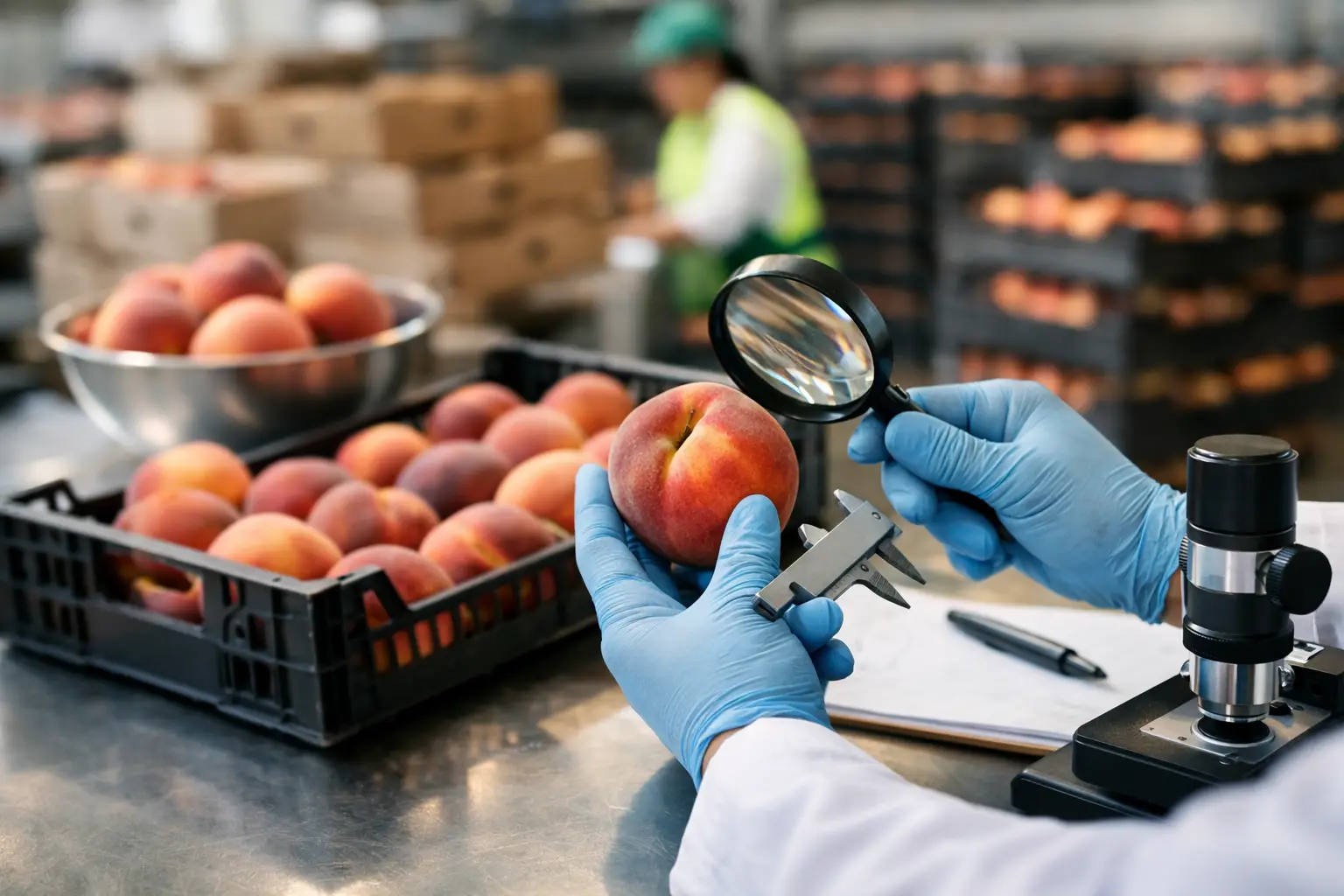
A peach program rarely fails because of one dramatic mistake. More often, it slips through small inconsistencies - mixed maturity, uneven sizing, weak packaging, incomplete traceability, or transit conditions that were acceptable on paper but not in practice. For importers, wholesalers, retailers, and foodservice buyers, that is exactly why working with a peach supplier with quality control is not a preference. It is a commercial safeguard.
In fresh produce, peaches are especially sensitive. They reward careful handling and punish shortcuts quickly. A good-looking load at origin can become a claim at destination if firmness, temperature discipline, sorting standards, and packing integrity are not managed with precision. Buyers who source at scale already know this. The real question is not whether quality control matters, but what it should actually look like from the field to final delivery.
What a peach supplier with quality control should really provide
Quality control is often described too narrowly, as if it starts at the packing line and ends with a visual check before shipment. Serious B2B buyers need more than that. In practice, a reliable peach supplier with quality control manages risk across the full value chain.
That starts with orchard selection. Not every grower, plot, or harvest window delivers the same result. Variety choice, agronomic practices, harvest timing, and local weather patterns all influence the final commercial profile of the fruit. A supplier that works closely with selected growers has greater control over consistency than a trader that simply buys whatever is available in the market.
The second layer is harvest discipline. Peaches picked too early may travel better, but they can disappoint at destination in flavor and eating quality. Fruit picked too late may look attractive at loading and then deteriorate too fast in transit. There is always a balance between shelf life, pressure, sugar development, and the customer’s intended use. That balance should be managed deliberately, not guessed.
Then comes sorting and standardization. Professional buyers do not just buy peaches. They buy a defined specification - size range, color coverage, firmness level, permitted tolerance, packaging format, labeling, and pallet presentation. If lots are not standardized carefully, the problem appears downstream in the form of claims, rejections, markdowns, or damaged customer trust.
Quality control is not only about fruit appearance
A polished outer appearance can create false confidence. In peaches, internal condition matters just as much as external presentation. Pressure levels, maturity stage, bruising sensitivity, and expected shelf life all need to be evaluated against transit time and market destination.
This is where experienced suppliers distinguish themselves. They do not treat all orders the same way. A nearby wholesale market, a supermarket distribution center, and an overseas importer do not have identical requirements. The right lot for one channel may be the wrong lot for another. Quality control, at a professional level, means matching fruit profile to commercial use.
There is also a logistical dimension that buyers cannot ignore. Peaches are highly responsive to temperature management. Cold chain discipline affects freshness retention, texture, and claim risk. If pre-cooling, storage, loading, and transport conditions are not aligned, even strong fruit can lose value before arrival. That is why quality control must extend beyond grading tables into warehousing and shipment execution.
The commercial value of traceability and lot consistency
For B2B buyers, traceability is not a marketing extra. It is an operating requirement. A supplier should be able to identify where the fruit came from, how it was packed, when it was harvested, and which lot was shipped to which customer. When issues arise, speed and clarity matter.
Without traceability, even a small quality complaint can become expensive. It slows investigations, creates uncertainty across multiple lots, and raises avoidable pressure on the buyer’s own customer relationships. With organized traceability, the supplier can isolate the issue, verify records, and respond with precision.
Lot consistency is equally critical. A buyer may accept natural variation within realistic tolerances, but not erratic performance across the same shipment or repeated orders. Consistency supports retail planning, wholesale resale, pricing decisions, and shelf presentation. It reduces friction throughout the supply chain.
For that reason, the strongest suppliers build quality control around repeatability. They aim to deliver not just premium fruit, but premium fruit that behaves predictably across programs and over time.
What professional buyers should ask before committing
A supplier’s sales presentation may sound convincing, but procurement decisions should rest on operational evidence. The most useful questions are practical.
Ask how growers are selected and monitored. Ask how harvest timing is determined for different destinations. Ask which quality parameters are checked before packing and before loading. Ask how non-conforming fruit is handled. Ask how packaging is chosen for different transit conditions and retail requirements. Ask how traceability works at pallet and lot level.
The answers reveal whether quality control is embedded in the business or added as a sales phrase. Serious suppliers speak clearly about process. They understand tolerances, destination risk, and the difference between a spot load and a long-term supply program.
It is also worth asking how the supplier manages trade-offs. There is no universal perfect peach. Some buyers want firmer fruit with longer travel capacity. Others prioritize ripening performance and immediate shelf appeal. Some programs require aggressive sizing uniformity. Others focus on price-positioned categories with tighter cost targets. A capable supplier explains what is possible, what is advisable, and where compromise may affect performance.
Why origin management matters in Greek peach exports
Greek peaches hold strong commercial appeal in international markets when they are selected and packed correctly. Origin has value, but origin alone does not protect the buyer. What protects the buyer is disciplined execution.
That means a supplier must combine access to production with organized post-harvest management. The closer the relationship to the orchard, the better the ability to influence quality at the source. The more structured the packing, inspection, and shipping process, the lower the exposure to inconsistency.
This is where a company such as ELYSIAN FRUIT fits the needs of demanding trade buyers. The value is not simply that the fruit is Greek. The value is the combination of selected production, strict sorting, packing aligned with international standards, freshness management, traceability, and secure transport planning. For importers and distributors, that combination reduces uncertainty in a category where timing and condition are everything.
A peach supplier with quality control supports long-term margins
Procurement teams are often pressured to compare offers mainly on price. That is understandable, but peaches are a category where a lower purchase price can become a higher total cost very quickly. Claims, repacking, shrink, inconsistent shelf life, and retailer dissatisfaction all affect margins.
A peach supplier with quality control helps protect profitability by reducing those hidden costs. Better lot selection can lower rejection rates. Stronger standardization can improve sell-through. Better packaging can reduce transit damage. Reliable documentation can speed issue resolution. Consistent performance can support repeat business and long-term customer confidence.
This does not mean the most expensive supplier is automatically the best choice. It means buyers should evaluate value in full commercial terms. The right partner is one that aligns quality, logistics, specification management, and service discipline with the realities of the target market.
Quality control is a partnership, not a claim
The best supplier relationships in fresh produce are built on transparency. Buyers need accurate specifications, realistic lead times, and honest communication about crop conditions, sizing availability, and seasonal shifts. Suppliers need clear briefs, agreed tolerances, and visibility into the final market requirements.
When both sides work with that level of clarity, quality control becomes more than inspection. It becomes a shared framework for protecting product value from harvest to delivery. That is especially important in peaches, where the window for error is narrow and the cost of inconsistency is high.
A dependable peach program begins with fruit, but it is sustained by process. Buyers who choose suppliers on that basis are not just buying peaches for the next load. They are building a supply chain that can support premium positioning, traceable trade, and long-term confidence in every shipment.
The smartest buying decision is rarely the loudest offer in the market. It is the partner whose quality control is visible in every detail the moment the fruit arrives.

Comments