
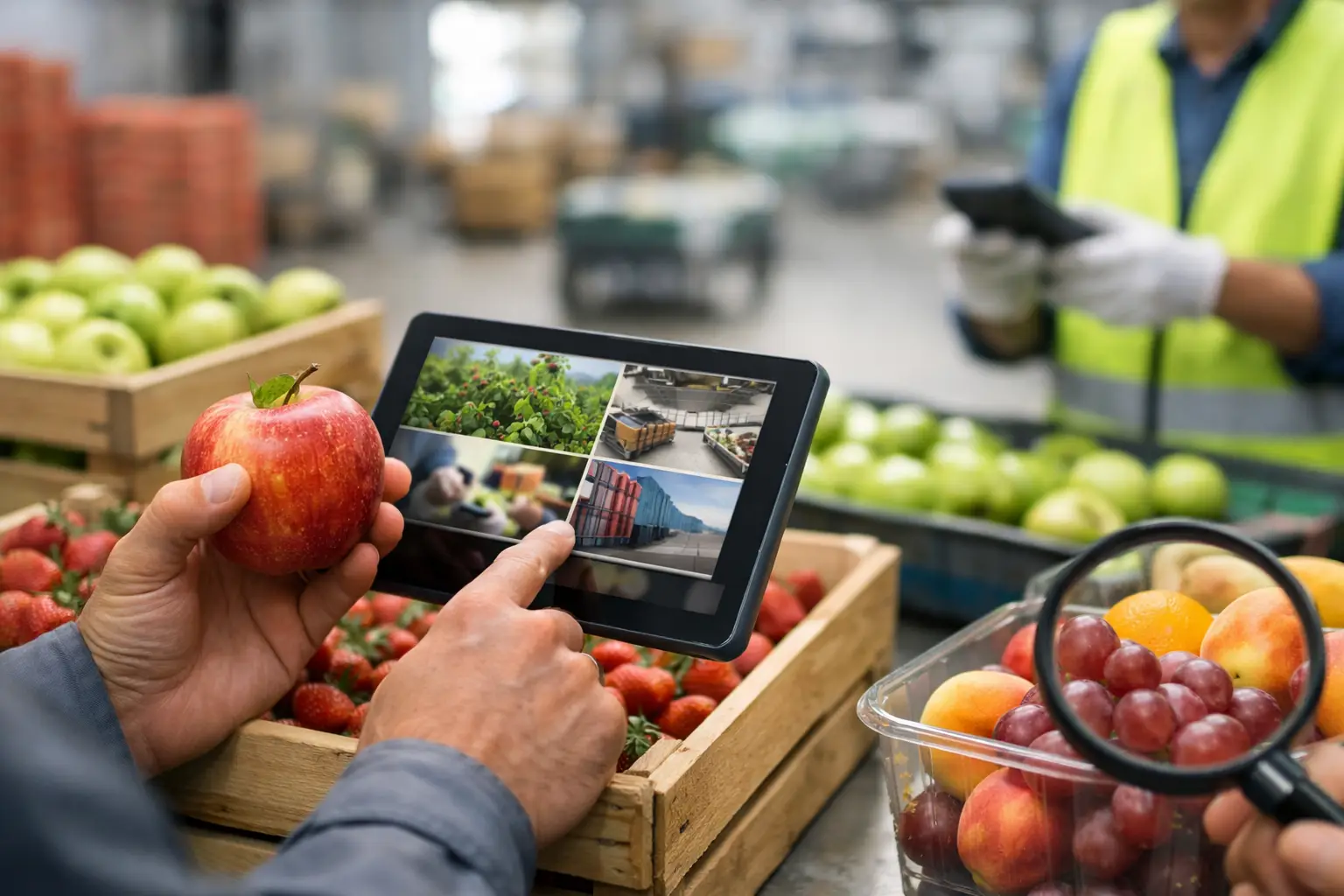
A fruit shipment can look perfect on arrival and still create serious exposure for the buyer if one basic question cannot be answered fast: where exactly did this lot come from, and what happened to it at every stage? That is the real business value behind how fruit traceability works. In wholesale and export trade, traceability is not a formality. It is a control system that protects quality, supports compliance, and reduces commercial risk.
For importers, distributors, and retail chains, traceability matters because fresh fruit moves quickly, shelf life is limited, and each decision in the chain affects the final result. A lot harvested one day earlier, cooled one hour later, or packed under different conditions can perform very differently in transit and on the shelf. When traceability is structured correctly, those variables are visible, documented, and manageable.
What how fruit traceability works really means
At its core, traceability is the ability to identify the history, location, and handling of a fruit lot from the orchard to final delivery. In practical terms, that means every commercial unit can be connected to specific production and handling data. The product is not just labeled as peaches, kiwifruit, or cherries. It is tied to a grower, a plot, a harvest date, a packing date, a batch code, and shipment records.
This is where serious operators separate themselves from generic trading models. A traceable supply chain does not rely on assumptions or verbal confirmations. It relies on batch identification, process discipline, and records that can be checked quickly when a customer asks for information or when an issue needs investigation.
For B2B buyers, this has direct value. It supports claim handling, quality reviews, compliance checks, and continuity planning. It also helps buyers protect their own downstream relationships with retailers, foodservice partners, and end customers.
Traceability starts before harvest
Strong traceability does not begin at the packing house. It begins in the field, with the selection of growers and production areas that can be monitored consistently. If the supply base is fragmented and documentation is weak, the traceability system will remain partial no matter how advanced the software may be later.
The first layer is source identification. Each orchard, farm, or production block needs a clear internal identity linked to the grower and crop. For export-oriented fruit businesses, this matters because variety, maturity profile, cultivation practices, and harvest timing all influence final market performance.
The second layer is production records. Depending on the program and market requirements, these may include agronomic inputs, harvest windows, and compliance documentation. Not every buyer needs the same level of detail, and not every market asks for the same records. Still, the principle is consistent: when a fruit lot enters the commercial chain, its origin should already be documented, not reconstructed later.
Lot coding at harvest and intake
The practical turning point in how fruit traceability works is lot creation. Once fruit is harvested, it must be grouped in a way that preserves identity without slowing down operations unnecessarily. That balance matters. If lot sizes are too broad, traceability loses precision. If they are too narrow, the system becomes difficult to manage at scale.
In most professional fruit operations, harvested product is assigned a lot or batch code at intake. That code typically connects several pieces of information: grower, orchard or field, product type, variety, harvest date, and sometimes even the picking crew or time window. From that point forward, the code follows the fruit through sorting, packing, storage, and shipping.
This stage is critical because intake is where mixing risk begins. If fruit from different sources is combined without control, traceability weakens immediately. Good process design prevents that. Clear receiving procedures, disciplined identification, and physical separation where necessary are just as important as digital records.
How traceability works inside the packing facility
The packing house is where traceability becomes operational discipline. Fruit is graded, sorted, packed, and labeled at speed. If there is no structured control, source identity can be lost in a single shift.
An effective packing traceability system records what came in, how it was processed, and what commercial output it became. A specific inbound lot may be packed into multiple formats for different customers. At the same time, a shipment for one customer may include multiple lots if specifications allow it. The system must capture both directions: one step back to the source and one step forward to the destination.
This is why labeling matters so much. Cartons, crates, pallets, and shipping units need readable batch information linked to production records. The best systems make that information easy to retrieve under pressure. A buyer with a quality claim does not want a vague explanation. They want a documented answer tied to the exact pallet or batch delivered.
There is also a quality dimension here. Traceability is not separate from grading and inspection. When quality checks are linked to each lot, teams can identify patterns. If a specific origin, maturity stage, or packing window consistently performs better, that insight supports better sourcing and packing decisions in future programs.
Cold chain data is part of traceability
In fresh fruit trade, traceability is not only about origin. It is also about handling conditions. Temperature management, pre-cooling, storage duration, and loading discipline all affect freshness and shelf life. A shipment can be traceable to the orchard and still fail commercially if cold chain records are missing or inconsistent.
That is why serious exporters treat logistics data as part of the traceability chain. The fruit should be linked not only to where it was grown and packed, but also to how it was cooled, stored, and dispatched. For sensitive categories such as cherries, berries, stone fruit, and certain premium summer fruits, this becomes even more important.
There is a practical trade-off here. Not every shipment requires the same level of monitoring detail. The right level depends on fruit type, destination, transit time, customer requirements, and claim sensitivity. But for international B2B trade, the expectation is clear: if there is a quality concern, handling history should be available quickly enough to support a professional response.
Why buyers ask for traceability
For professional buyers, traceability is not a marketing phrase. It is part of supplier evaluation. It shows whether a supplier can operate with consistency, transparency, and control.
The first reason buyers care is risk management. If a specification issue, compliance concern, or quality complaint appears, traceability limits the scope of the problem. Instead of questioning an entire season or all shipments, the buyer and supplier can isolate specific lots and act proportionately.
The second reason is performance visibility. Buyers want to know whether supply consistency is based on process or luck. Traceability helps demonstrate that fruit quality is supported by controlled sourcing, selection, sorting, and shipment management.
The third reason is relationship protection. Importers, wholesalers, and retailers are accountable to their own customers. When they work with a traceable supplier, they are better positioned to respond with confidence, not uncertainty.
Where traceability can fail
Most traceability problems do not come from the absence of technology. They come from breaks in execution. Handwritten notes that are not transferred correctly, unlabeled repacking, mixed pallets, undocumented substitutions, or inconsistent lot discipline can all damage traceability.
This is why a premium supply program requires more than software. It requires trained teams, standard operating procedures, and a culture that treats documentation as part of product quality. Speed matters in fresh produce, but speed without control creates hidden cost.
It also depends on scale and market strategy. A company serving demanding export customers must usually maintain tighter traceability discipline than a business focused on opportunistic spot trade. The commercial model shapes the system.
For that reason, companies such as ELYSIAN FRUIT build traceability into the broader quality promise, not as a separate back-office task. When sourcing, packing, and logistics are managed as one chain, traceability becomes stronger and more useful to the buyer.
How fruit traceability works as a competitive advantage
When done well, traceability supports faster decisions, more accurate claims handling, and stronger long-term business relationships. It helps buyers trust that premium fruit is backed by premium process. That matters in every category, but especially in export markets where transit time, customer scrutiny, and brand reputation leave little room for uncertainty.
It is also a practical sign of professionalism. Any supplier can say a product is fresh or high quality. A traceable supplier can prove where it came from, how it was handled, and what controls were applied along the way.
For buyers building dependable fruit programs, that level of clarity is not extra. It is part of the product itself. And in a market where consistency wins repeat business, traceability is one of the clearest signals that a supplier is ready for serious, long-term trade.







Comments