
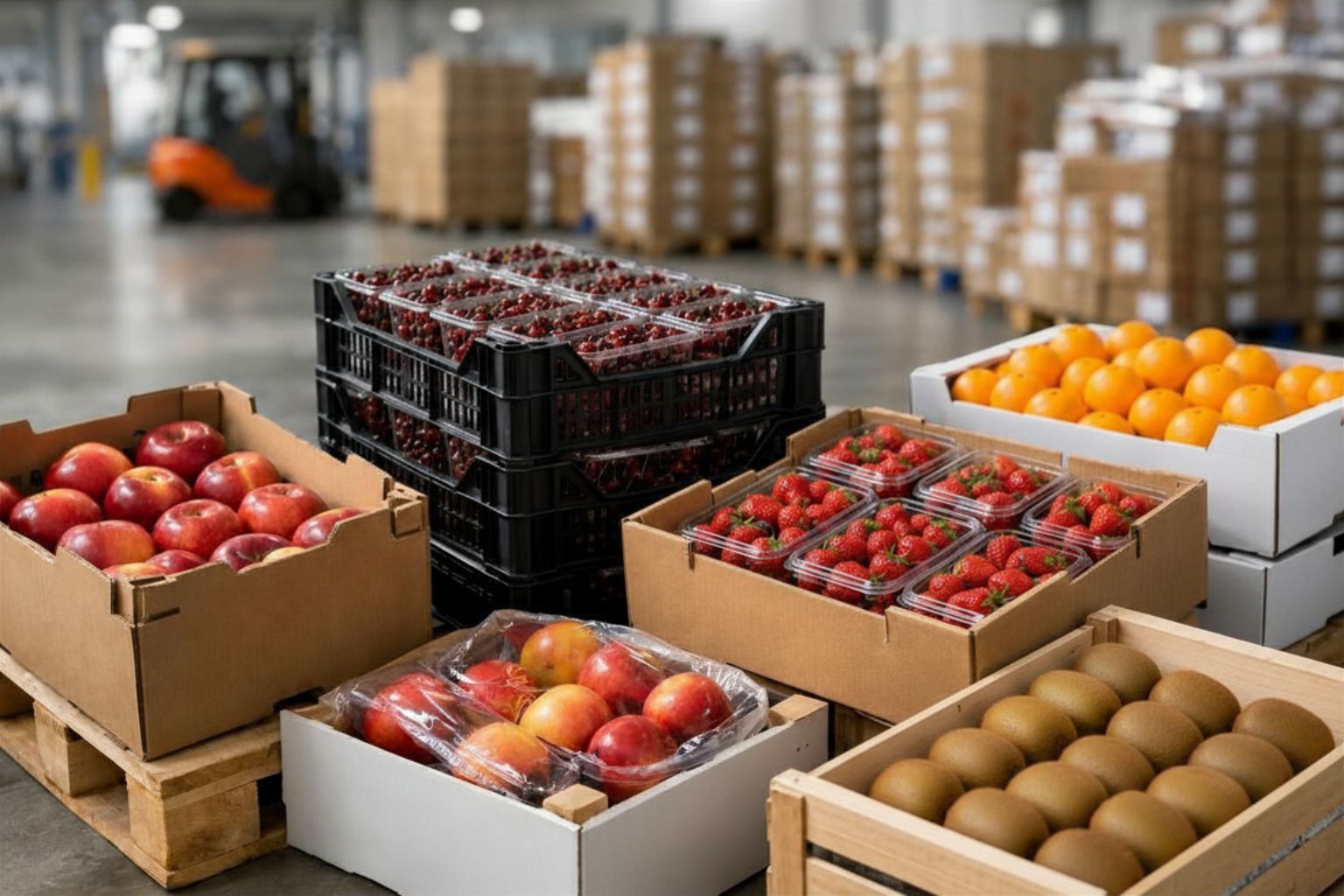
A shipment can leave the packing facility in excellent condition and still arrive with soft fruit, pressure marks, dehydration, or uneven ripening. In export trade, that gap between origin quality and arrival quality is where fruit export packaging solutions prove their value. For importers, distributors, and retail buyers, packaging is not a finishing detail. It is a commercial control point that protects premium quality, supports traceability, and reduces avoidable risk.
Fresh fruit moves through a chain that includes handling, palletization, cold storage, inland transport, port operations, ocean or road transit, and final distribution. At every stage, packaging must do more than hold product. It must preserve structure, manage airflow, limit moisture issues, maintain presentation, and fit the requirements of each market. When packaging is selected correctly, it supports shelf life, consistency, and customer confidence. When it is selected poorly, even strong fruit can lose value before it reaches the shelf.
Why fruit export packaging solutions matter in B2B trade
Professional buyers evaluate fruit by more than size, color, and Brix. They also assess how reliably a supplier can deliver uniformity across multiple loads, seasons, and destinations. Packaging plays a direct role in that reliability.
For wholesale and retail programs, the main objective is not simply to ship fruit. It is to ship fruit that arrives in marketable condition, with the expected appearance and handling performance. A cherry program for short-haul distribution will not require the same packaging approach as kiwifruit moving through long transit routes. Strawberries, nectarines, persimmons, apples, and oranges each respond differently to pressure, humidity, stacking weight, and temperature shifts. That is why effective packaging decisions are tied to product behavior, route duration, and customer specifications.
There is also a margin issue. Damage claims, shrink, repacking costs, and shelf-level inconsistency affect profitability on both sides. Strong packaging choices can help lower these costs, but only when they are aligned with the fruit category and the logistics model. More material is not always better. Sometimes heavier packaging adds cost without improving protection. In other cases, reducing weight too aggressively can increase collapse risk and lead to larger losses.
The core function of export packaging
Export packaging for fresh fruit has four jobs. It must protect the product, maintain the conditions needed for freshness, support efficient logistics, and present the fruit at the standard expected by the buyer.
Protection starts with structural integrity. Cartons, trays, punnets, pads, and dividers must withstand stacking pressure during transit and warehousing. This is especially critical for soft or highly perishable fruit, where even minor compression can reduce saleable volume.
Freshness depends heavily on ventilation and moisture balance. Packaging has to work with the cold chain, not against it. Poor airflow can slow cooling or create temperature variation inside the pallet. Excess moisture retention can encourage decay, while too much exposure can lead to dehydration and weight loss. The correct balance depends on the commodity, the season, and the destination.
Logistics efficiency matters just as much. Packaging dimensions affect pallet stability, container optimization, loading speed, and handling at destination. Standardized formats can simplify replenishment for retailers and reduce complexity for distributors. At the same time, some markets need tailored formats for local merchandising or buyer-specific programs.
Presentation is the final commercial layer. Premium fruit cannot arrive in damaged or inconsistent packaging and still command the same market position. Clean branding, clear labeling, and uniform pack appearance reinforce quality perception before the carton is even opened.
How fruit type changes the packaging decision
Not all fruit responds the same way to pressure and transit time, so fruit export packaging solutions should begin with the product itself.
Cherries and strawberries require a high level of care because they are sensitive to bruising, moisture issues, and temperature deviation. Their packaging often prioritizes gentle handling, fast cooling, and stable presentation in smaller retail-ready units. The trade-off is cost. These formats usually increase material and packing expense, but that cost is often justified by lower shrink and stronger shelf appeal.
Stone fruit such as apricots, peaches, nectarines, and plums needs a balance between protection and breathability. If the pack is too tight, pressure marks become more likely. If it is too loose, movement during transit can damage the fruit. Tray design, cavity fit, and carton strength all matter here, particularly for export routes with multiple handling points.
Kiwifruit, apples, oranges, and chestnuts typically tolerate longer transit better, but they still require disciplined packaging design. These categories often move in formats optimized for stackability, airflow, and volume efficiency. That said, long shelf life should not create false confidence. Poor carton performance or weak pallet building can still result in arrival issues, especially over long-distance export programs.
Persimmons are another good example of why nuance matters. Depending on maturity stage and target market, they may need packaging that supports firmness retention while protecting a delicate outer appearance. The right solution depends on the exact specification the buyer expects at destination.
Packaging materials and format choices
The most common export formats include corrugated cartons, telescopic boxes, tray packs, clamshells, punnets, and bulk bins. Each has its place, and the right choice depends on the sales channel.
Corrugated cartons remain the standard for many export programs because they offer good printability, practical stacking performance, and flexibility across product categories. Their quality, however, varies widely. Board grade, moisture resistance, vent design, and construction quality directly affect performance under cold chain conditions.
Retail-ready formats such as punnets and clamshells are useful when buyers want easier shelf replenishment and stronger product presentation. They can also reduce handling damage at destination because the fruit is not repacked. The trade-off is that they increase packaging cost and may limit packing density.
Bulk formats can improve freight efficiency and lower unit costs for some channels, especially where repacking is expected at destination. But bulk is not suitable for every fruit or every customer. For premium programs, especially with delicate fruit, lower packaging cost at origin can easily become higher quality loss later in the chain.
Sustainability also shapes format decisions. Many buyers want packaging with lower plastic content or improved recyclability. That is a valid commercial requirement, but it must be handled with discipline. A more sustainable material that performs poorly in humidity or stacking conditions is not a better solution if it leads to food waste and claims. The right approach is to improve environmental performance without weakening product protection.
Fruit export packaging solutions and traceability
For professional buyers, packaging is also an information carrier. Labels, lot coding, origin details, size classification, and pallet identification support traceability across the supply chain. In export trade, this is not optional. It is part of quality assurance.
Clear coding helps buyers manage stock rotation, quality checks, and any issue resolution that may arise after arrival. It also supports compliance with market requirements and internal procurement standards. When traceability is integrated into the packaging process from the start, it strengthens trust and reduces friction in commercial relationships.
This is where disciplined operations make a difference. Packaging must match the pack list, the grade specification, the pallet configuration, and the customer program. Consistency across documents, labels, and physical loads is one of the strongest signals of an organized export partner.
What serious buyers should expect from a supplier
A capable exporter does not treat packaging as a generic purchase. It should be part of a wider quality system that begins with fruit selection and continues through grading, packing, cold chain management, and dispatch.
Buyers should expect packaging recommendations based on fruit variety, harvest condition, route length, and destination requirements. They should also expect realistic guidance. Not every premium-looking format is the right export format. Not every low-cost carton is a cost-saving decision. The best suppliers are transparent about trade-offs and align packaging with commercial outcome, not just appearance or short-term price.
This is especially relevant for long-term B2B programs. A packaging format that works for one promotional load may not be suitable for a season-long retail supply agreement. Scale changes pressure points. Repetition exposes weaknesses. The supplier that can maintain premium quality over time is the one that evaluates packaging as part of a repeatable export model.
At ELYSIAN FRUIT, that perspective is inseparable from how premium Greek fruit should be presented and protected in international markets. Packaging must support freshness, uniformity, and safe transport with the same discipline applied to sourcing, sorting, and standardization.
The real standard is arrival performance
The market does not reward packaging that looks good at origin but fails under export conditions. It rewards fruit that lands with the right firmness, appearance, labeling, and shelf potential. That is the standard that matters.
The strongest fruit export packaging solutions are built around that reality. They reflect the product, the route, the customer, and the commercial expectation at destination. When those elements are aligned, packaging becomes more than a box or tray. It becomes part of the quality promise behind every shipment.
For buyers who build their reputation on consistency, the best packaging decision is usually the one that protects tomorrow's sale, not just today's load.





Comments