
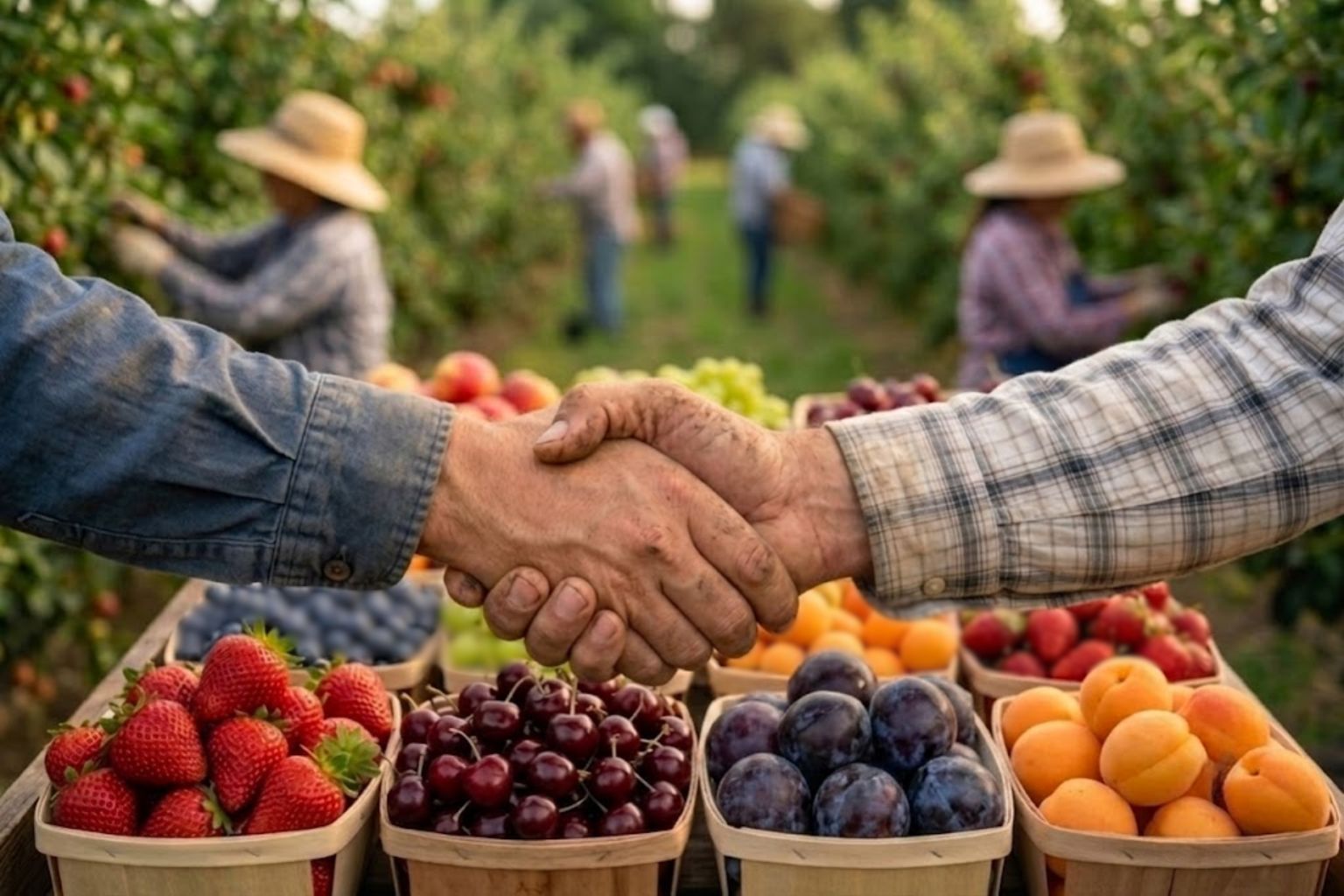
One delayed shipment in peak season can do more than reduce margin. It can disrupt retail programs, weaken shelf performance, and force buyers into reactive sourcing at the worst possible time. That is why knowing how to choose fruit import partner is not a procurement detail. It is a commercial decision that affects continuity, brand reputation, and long-term profitability.
In fresh produce, the right partner is not simply the one with product availability. A dependable fruit import partner protects quality from origin to delivery, understands category standards, and works with the discipline required by wholesale, retail, and foodservice channels. Price matters, but price without consistency usually becomes expensive.
How to choose fruit import partner with lower risk
The first question is not whether a supplier can ship fruit. Many can. The real question is whether they can ship the right fruit, in the right specification, at the right time, with the documentation, packaging, and communication standards your market requires.
A serious import partner should be able to show control across the value chain. That includes sourcing, harvest timing, sorting, packing, cold-chain management, and shipment coordination. When these stages are fragmented across too many intermediaries, variability increases. For a professional buyer, variability is risk.
This is why origin access matters. A partner connected directly to production, or working through a tightly managed grower network, usually offers better visibility on crop condition, expected volumes, and quality windows. That does not guarantee perfection. Fresh fruit always carries agricultural variables. It does, however, improve predictability, which is what commercial buyers need most.
Look beyond price and assess operating discipline
A low offer can be attractive at the negotiation table and disappointing at delivery. In fruit trade, the cost of inconsistency often appears later - in shrink, claims, customer complaints, repacking, or missed promotions.
A stronger way to evaluate a supplier is to look at operating discipline. Ask how fruit is selected, how lots are graded, and how non-conformities are handled before loading. Ask whether packing specifications are adapted to your market or whether the supplier works from a fixed template regardless of customer needs. The answers will tell you whether you are dealing with a trader moving volume or with a partner built for repeat business.
Professional discipline also shows in communication. Buyers need realistic harvest updates, honest availability forecasts, and prompt notice when conditions change. A supplier that only communicates well when the market is easy is not a reliable partner. The test is how they communicate when volumes tighten, weather shifts, or transit risk increases.
Quality control should be visible, not assumed
If quality control is described vaguely, assume it is weak. Premium fruit programs require measurable standards, not broad promises. Your import partner should be able to explain how they inspect fruit at intake, during sorting, before packing, and prior to dispatch.
This is especially important for products where maturity, pressure, size uniformity, skin finish, and brix levels influence commercial performance. A shipment can technically meet a minimum standard and still disappoint in your market if the eating quality is inconsistent or the visual presentation lacks uniformity.
The best partners treat quality as a controlled process. They do not rely on end-stage inspection alone. They build consistency through grower selection, harvest timing, strict sorting, and packing protocols aligned with customer requirements. For buyers serving supermarkets and organized wholesale networks, this level of control is often the difference between a working program and a recurring claims file.
Traceability and compliance are not optional
For any buyer supplying regulated or quality-sensitive channels, traceability is part of the commercial foundation. You should know where the fruit comes from, how it was handled, and how each lot can be identified if a question arises after delivery.
When evaluating how to choose fruit import partner, pay close attention to documentation readiness. Can the supplier provide clear lot identification, packing details, origin information, and quality records? Are their processes aligned with international standards and buyer specifications? If traceability only appears when requested urgently, the system is not strong enough.
Compliance also goes beyond paperwork. It includes packing consistency, labeling accuracy, phytosanitary readiness where required, and disciplined execution against agreed specifications. In international trade, small documentation gaps can create expensive delays. A reliable partner understands that operational accuracy protects both sides of the transaction.
Logistics capability determines fruit condition on arrival
In fresh fruit, shipping is part of quality. A product packed correctly and handled poorly in transit will still arrive with commercial issues. That is why logistics capability should be evaluated with the same seriousness as orchard quality.
Ask how the supplier manages pre-cooling, cold storage, loading conditions, and transport planning. Ask how they protect transit-sensitive fruit during warm periods or long-distance shipments. A partner with export experience should be comfortable discussing route planning, loading discipline, packaging suitability, and timing decisions that protect shelf life.
It also helps to understand whether the supplier can adapt to your channel. A wholesale market may accept one type of packing and turnover rhythm, while a retail chain may require tighter presentation standards, more precise palletization, and stricter delivery windows. A capable partner does not treat all customers the same. They align logistics execution with the commercial reality of the destination market.
Consistency matters more than a strong first shipment
Many suppliers can perform well once. Fewer can perform well over a season, and fewer still can maintain standards across multiple seasons. For professional buyers, this distinction matters.
A fruit import partner should be evaluated on consistency of lots, responsiveness during pressure periods, and ability to sustain agreed specifications when the market becomes more difficult. Anyone can look efficient when supply is abundant. The stronger partner remains organized when fruit is tight, demand is high, and every shipment matters.
This is where scale and selectivity must be balanced. A very large supplier may offer availability, but not always lot attention. A very small supplier may offer care, but not sufficient continuity. The right choice depends on your program size, your customer commitments, and how much seasonal flexibility you can tolerate.
The supplier relationship should fit your business model
Not every buyer needs the same kind of partner. An importer supplying promotional retail volumes has different priorities from a distributor serving mixed wholesale accounts. One may prioritize exact programming and uniform presentation. The other may need broader assortment, faster commercial decisions, and room to react to changing demand.
The best partnerships are built when both sides are clear about expectations from the start. That includes volumes, specifications, packaging, shipment cadence, claim handling, and communication frequency. Misalignment often begins before the first load ships, simply because commercial assumptions were never clarified.
A supplier that asks detailed questions about your market, customers, and operating needs is usually a better sign than one that moves immediately to price. Serious exporters understand that long-term business depends on fit, not just transaction speed.
What to ask before you commit
Before entering a new supply relationship, ask for evidence, not just assurances. Review product photos and packing examples from actual shipments. Discuss seasonal calendars honestly. Request clarity on minimum and peak volumes. Ask how claims are assessed and how quality issues are escalated.
You should also listen for how the supplier talks about growers, packing, and customer service. Strong partners speak with precision. They know their product, their process, and their limits. That last point matters. A supplier who admits where conditions may vary is often more trustworthy than one who promises perfect uniformity in every circumstance.
For buyers sourcing premium Greek fruit, this standard is especially relevant. Market demand rewards freshness, appearance, and eating quality, but those strengths only translate commercially when supported by disciplined selection, traceability, and export execution. Companies such as ELYSIAN FRUIT are valued in international trade because they combine production access, strict sorting, standardized packing, and a clear focus on long-term B2B reliability.
How to make the final decision
If two suppliers look similar on paper, choose the one that reduces uncertainty. That may mean better traceability, clearer communication, stronger packing discipline, or more realistic forecasting. Fresh produce programs perform best when surprises are limited.
The right fruit import partner is not simply a vendor. They are part of your supply chain reputation. They affect your ability to deliver premium quality, protect margin, and build confidence with your own customers.
A good buying decision starts with product, but it should end with trust earned through process. When a partner can prove consistency from field to final delivery, the relationship stops being transactional and starts becoming an asset.






Comments