
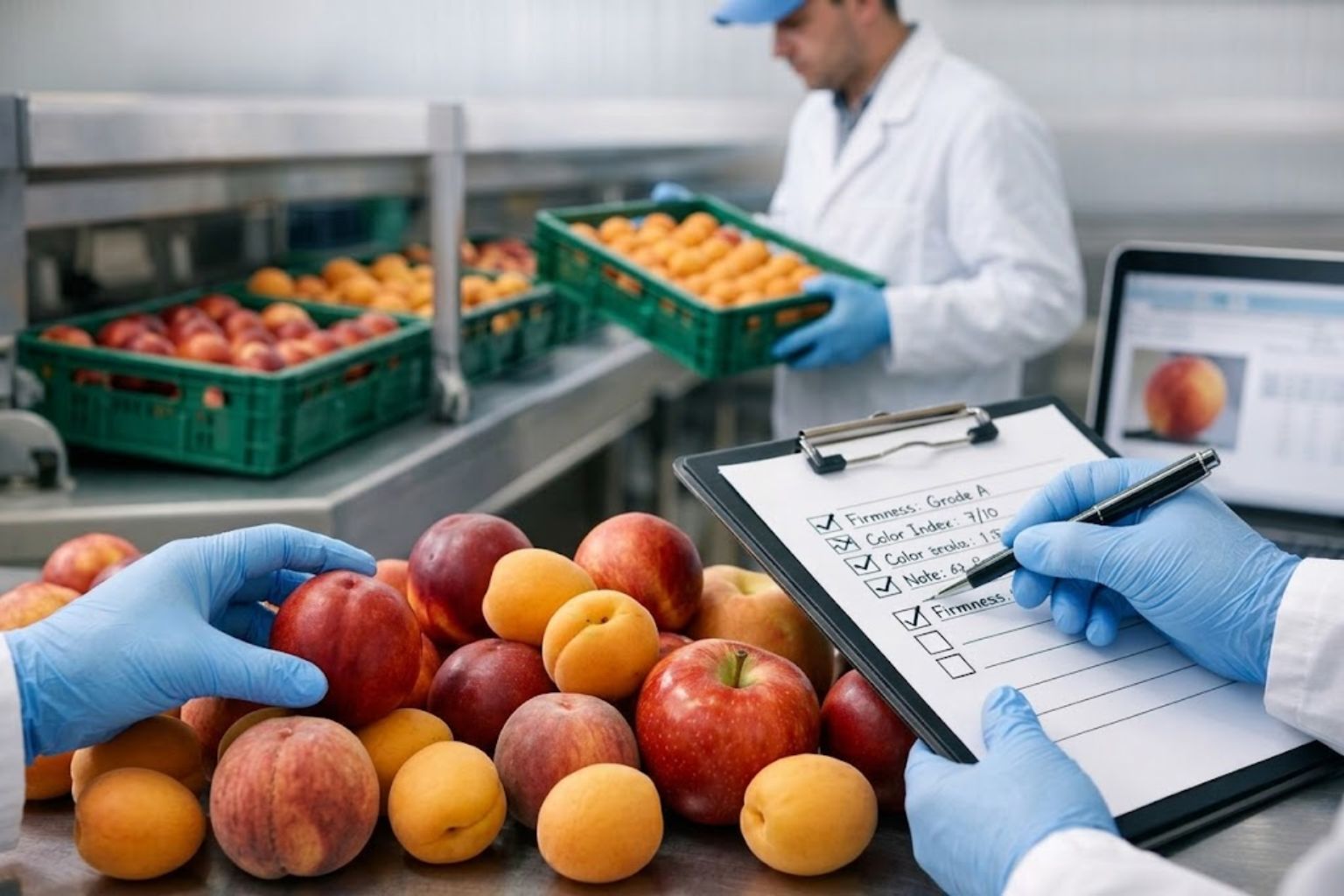
A shipment can look excellent at loading and still become a claim by arrival. In fresh produce, that gap is where margins are won or lost. A serious guide to fruit quality assurance starts with one principle: quality is not a final inspection task. It is a controlled process that begins in the orchard, continues through packing and transit, and ends only when the fruit reaches the buyer in the expected condition.
For importers, wholesalers, retail chains, and foodservice distributors, this matters beyond appearance. Fruit quality assurance protects shelf life, reduces rejection rates, supports traceability, and lowers commercial risk. In export-oriented trade, where timing, temperature, and uniformity directly affect sell-through, quality assurance is part of the product itself.
What fruit quality assurance really means
In professional fresh fruit trading, quality assurance is often confused with sorting. Sorting is visible. Assurance is systemic. It includes the standards used to approve growers, the maturity criteria applied at harvest, the grading tolerances in the packing line, the accuracy of labeling, the hygiene of facilities, the discipline of temperature management, and the documentation that follows each lot.
That distinction matters because many quality issues are not dramatic defects. They are small deviations that accumulate. Slightly early harvest can reduce flavor. Minor inconsistency in sizing can affect retail presentation. A short break in cold chain discipline can shorten shelf life enough to create problems at destination. None of these failures are always obvious at dispatch, but all of them carry cost.
For B2B buyers, a reliable supplier is not simply one that ships attractive fruit. It is one that can deliver repeatable outcomes across multiple loads, varieties, and market windows.
A practical guide to fruit quality assurance across the chain
The most effective quality systems work in sequence. Each stage supports the next, and weak control at one point cannot be fully corrected later.
Grower selection and orchard controls
Quality assurance starts with production discipline. That means working with selected growers who follow agreed cultivation practices, maintain orchard hygiene, and understand market-specific specifications. Fruit intended for premium wholesale or export programs cannot be treated as a generic commodity. Variety choice, pruning, irrigation, nutrition, and harvest planning all affect firmness, sugar development, size profile, and storage behavior.
This is also where traceability becomes credible. If the source orchard, harvest date, and production records are clear from the start, the entire chain becomes easier to manage. If source data is vague, even strong packing operations are working with a blind spot.
There is always a trade-off here. Tight grower selection improves consistency, but it can reduce sourcing flexibility during difficult seasons. Strong suppliers accept that trade-off because consistency has higher long-term value than opportunistic volume.
Harvest timing and maturity decisions
Many fruit quality problems begin with harvest timing. Fruit picked too early may travel well but underperform in flavor and finish. Fruit picked too late may satisfy immediate appearance standards yet lose firmness or shelf life during distribution. The right decision depends on fruit type, destination market, expected transit time, and customer requirements.
Cherries, apricots, nectarines, peaches, kiwifruit, strawberries, and citrus do not behave the same way. The maturity window that suits a nearby market may not suit an overseas shipment. This is why quality assurance cannot rely on one generic standard. It must align harvest criteria with the commercial route.
Serious operators use measurable indicators where relevant, including size, color stage, firmness, soluble solids, and external condition. Visual judgment still matters, but it should be supported by repeatable criteria.
Intake inspection and lot segregation
Once fruit reaches the packing facility, intake inspection determines whether a lot is suitable for the intended program. This is where many exporters either protect value or create future claims. If mixed maturity, bruising, sunburn, pest damage, or inconsistent sizing is accepted too loosely, problems are simply moved downstream.
Lot segregation is essential. Fruit from different orchards, harvest dates, or quality profiles should not be blended carelessly to fill an order. Blending can make a pallet look balanced at dispatch while creating inconsistency for the buyer across cases. For supermarkets and structured wholesale programs, that inconsistency is expensive.
A disciplined intake process asks a simple commercial question: is this lot right for this customer, this route, and this shelf-life expectation?
Grading, packing, and presentation standards
Packing is where product quality becomes market-ready. It is not cosmetic work. It is the point where the supplier translates agricultural variability into a commercially reliable specification.
Uniformity is part of premium quality
For B2B buyers, premium quality means more than low defect counts. It also means uniformity within the case and across the shipment. Size consistency, color consistency, shape profile, and pack arrangement affect merchandising, customer confidence, and waste rates. A buyer can manage natural variation. What is harder to manage is unpredictable variation.
This is why strict grading matters. Defect tolerances must be clear, pack styles must be consistent, and labeling must match the actual contents. A strong packing operation does not just remove defective fruit. It builds a shipment profile that supports smooth resale.
Packaging protects quality, not just appearance
Packaging decisions should match the product and the route. Ventilation, material strength, moisture behavior, and pallet stability all influence delivered condition. Fragile fruit with high respiration requires different packaging logic than fruit with longer storage tolerance.
There is no one-size-fits-all answer. Heavier packaging may improve protection but increase freight cost. More open ventilation may support cooling but reduce visual presentation. Retail-ready packs can improve shelf placement but require tighter control on uniformity. Good quality assurance weighs these trade-offs against the customer program, not just against packing speed.
Cold chain control is non-negotiable
If one element defines delivered fruit quality, it is temperature discipline. Fresh fruit is highly responsive to time and temperature. Delays in pre-cooling, inconsistent storage temperatures, poor loading practices, or weak reefer management can undo careful work done at harvest and packing.
Cold chain control should be continuous, not assumed. That means prompt post-harvest cooling, monitored storage conditions, stable loading procedures, and transport settings that suit the fruit category and journey length. It also means avoiding avoidable dwell time on docks or in staging areas.
For export trade, this point is decisive. A shipment may comply with visual standards at origin and still arrive with reduced firmness, condensation issues, internal breakdown, or shortened shelf life if temperature management is compromised. Buyers do not judge quality by dispatch photos. They judge by arrival performance.
Traceability and documentation build trust
In professional produce trade, traceability is not only about food safety. It is also about accountability. When every lot can be connected to source, packing date, and shipment records, problems can be investigated quickly and accurately. That protects both buyer and supplier.
A strong traceability system supports claims handling, compliance reviews, and long-term program improvement. It also gives buyers confidence that the supplier is organized enough to manage complexity at scale. In international business, that confidence is commercially valuable.
Documentation should be clear, consistent, and aligned with the actual shipment. Errors in labeling, pallet identification, or specification records may look administrative, but they can delay receiving, complicate customs handling, and weaken buyer confidence.
The buyer's lens: what to evaluate in a supplier
Any guide to fruit quality assurance should address the procurement side. Buyers should not assess suppliers only on price and immediate visual quality. The better question is whether the supplier can produce consistent outcomes over time.
That means looking at source control, grading discipline, packing standards, cold chain management, and responsiveness when conditions become difficult. Every season brings variation. Weather shifts, yield changes, and logistics disruptions are part of the trade. The difference between an average supplier and a dependable one is not whether issues ever arise. It is how early they are identified, how clearly they are communicated, and how effectively they are managed.
This is where experienced companies such as ELYSIAN FRUIT strengthen long-term partnerships. By managing quality from field selection through final delivery, the supplier reduces uncertainty for importers, distributors, and retail buyers who need premium Greek fruit backed by professional execution.
Why quality assurance is a commercial strategy
Fruit quality assurance is often discussed as an operational function. In reality, it is a market strategy. Better assurance supports stronger brand positioning, fewer claims, more stable programs, and greater confidence from buyers who cannot afford inconsistency.
It also creates room for better decisions. When quality data is reliable, suppliers can route fruit more intelligently, match lots to customer expectations, and protect value across different market segments. Without that discipline, commercial decisions become reactive.
For buyers, the message is straightforward. Consistent premium fruit does not happen by inspection alone. It comes from a supplier that treats quality as a continuous responsibility, with international standards, traceability, and delivery performance working together. In fresh produce, trust is built case by case, load by load, and season by season.



Comments