
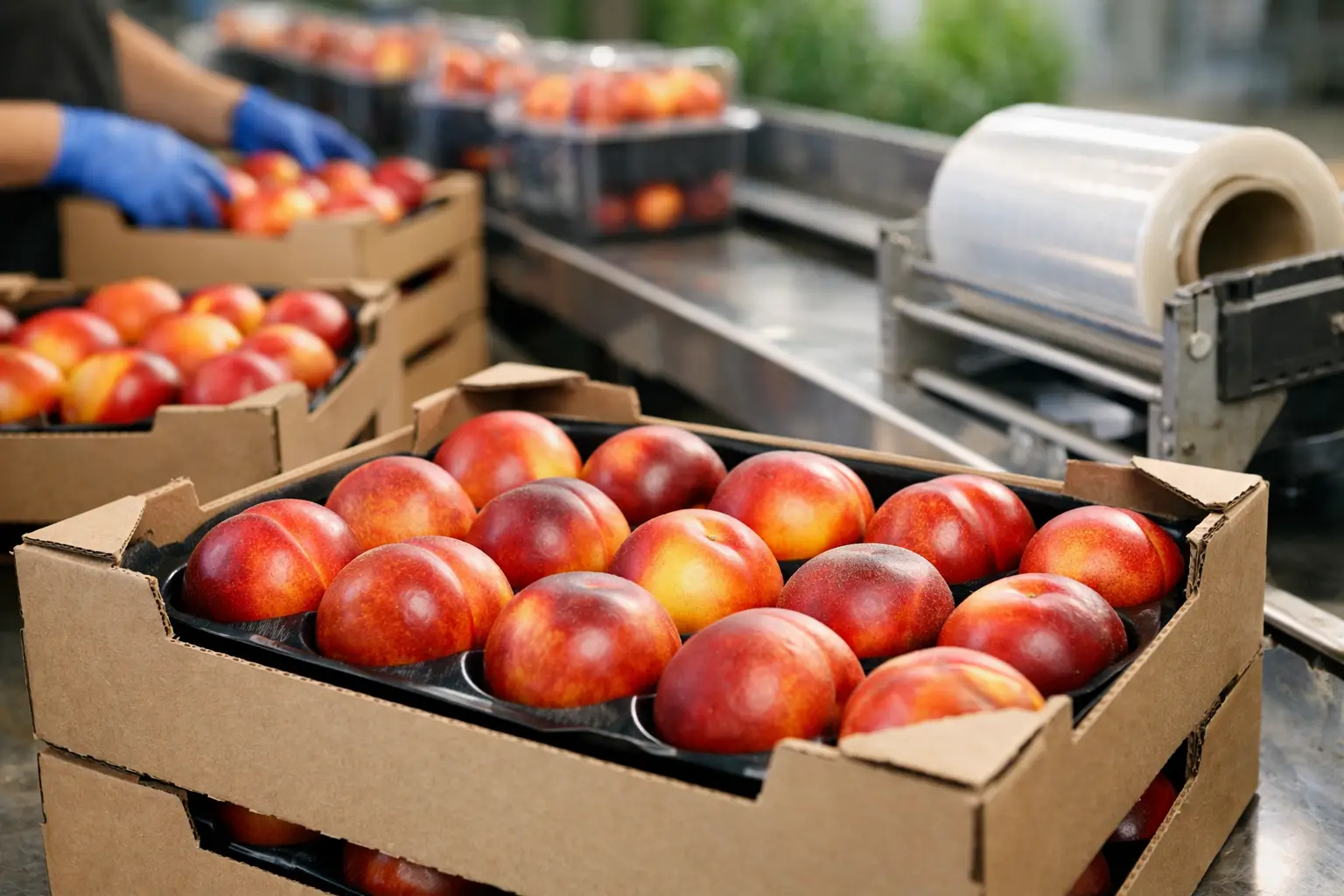
A nectarine shipment rarely fails because of one dramatic mistake. More often, value is lost through small packaging decisions that add up - fruit packed too tight, mixed sizing within the same lot, weak ventilation, unclear labels, or pallets built without transport conditions in mind. That is why nectarine wholesale packaging standards matter far beyond presentation. For wholesalers, importers, retailers, and foodservice buyers, packaging is a control point that protects quality, shelf life, traceability, and commercial consistency.
Why nectarine wholesale packaging standards matter
In wholesale trade, packaging is not just a box. It is part of the product specification. Nectarines are highly sensitive to pressure, temperature variation, and rough handling, which means packaging must support the fruit from packing line to final destination. A premium lot can lose its value quickly if bruising, dehydration, or uneven ripening appears before it reaches the customer.
For B2B buyers, this is a risk-management issue. Reliable packaging standards reduce claims, support smoother receiving operations, and help preserve uniformity across repeated orders. They also make it easier to align with retail programs and export requirements, where consistency is often as important as appearance.
The right standard depends on the market. A domestic wholesale program may accept different pack styles than an export order for supermarket chains. Still, the core expectation remains the same: fruit must arrive sound, uniform, traceable, and commercially ready.
The foundation of a compliant pack
Effective packaging begins before the carton is formed. Nectarines must be selected for maturity, firmness, color development, and freedom from defects according to the commercial program. Packaging cannot correct fruit that was harvested too early, packed too ripe, or poorly graded.
Uniformity is central. In a professional wholesale pack, buyers expect nectarines within the same carton to be closely matched in size, variety, ripeness stage, and external appearance. Mixed fruit may create problems at retail level, especially when part of the carton is shelf-ready and another part still needs more ripening time.
A sound pack also depends on pre-cooling and temperature discipline. Nectarines packed warm are more vulnerable to moisture loss and quality decline during transit. Even the best materials cannot compensate for breaks in the cold chain.
Size, count, and grade consistency
One of the most important nectarine wholesale packaging standards is consistency of count and caliber. Wholesale buyers build pricing, promotions, and distribution plans around predictable pack outcomes. If carton weights vary or counts are not aligned with specification, the issue is not only operational. It becomes commercial.
Grade consistency matters just as much. A premium label requires premium execution. Fruit with bruises, skin cuts, sunburn, or shape irregularities may still be marketable in some channels, but it should not be mixed into a lot sold as high-grade export fruit. Serious suppliers define tolerances clearly and control them at packing stage, not after complaints appear.
Protection without overpacking
Nectarines need protection, but excessive pressure inside the package can create the very damage the packaging is meant to prevent. This balance is one of the most common trade-offs in wholesale packing. Loose fruit can move and bruise. Overfilled cartons can compress the lower layers and reduce airflow.
The best approach depends on fruit size, firmness, transit duration, and destination market. Tray packs may offer better presentation and fruit separation for premium retail programs. Volume-fill formats may work efficiently for specific wholesale channels if the fruit is firm and the route is short. There is no single format for every shipment, but there should always be a clear fit between pack style and logistics reality.
Packaging materials and structural performance
Carton strength is a basic requirement in nectarine logistics. Boxes must withstand stacking pressure, cold storage humidity, handling at cross-docks, and the vibration of road or sea transport. Weak packaging does more than collapse physically. It disrupts airflow, damages fruit, and creates receiving problems that undermine buyer confidence.
Corrugated cartons remain the standard for most wholesale and export applications because they provide a workable balance of protection, ventilation, printability, and pallet efficiency. The board grade must match the route. A box that performs well in a local market may be unsuitable for longer export chains or high-humidity reefer conditions.
Ventilation design is equally important. Nectarines need air circulation to maintain stable temperatures throughout the load. Poorly designed vent holes can reduce cooling efficiency, especially in palletized export shipments. At the same time, too much exposure may increase dehydration risk if storage conditions are not properly controlled. This is why packaging decisions should always be made together with cold chain planning.
Labeling, traceability, and lot integrity
Professional packaging standards are not complete without clear identification. Every wholesale carton should support fast and accurate traceability. At minimum, buyers expect product identity, variety where applicable, origin, pack date or code, lot number, net weight, and supplier details according to market requirements.
Traceability is not just a compliance exercise. It protects the integrity of the supply chain. When each lot is clearly coded, quality reviews, stock rotation, and any corrective action can be handled quickly and with precision. For importers and retail distributors, that level of control is essential.
Lot integrity also deserves attention. Mixing fruit from different orchards, harvest windows, or maturity profiles into one commercial lot may create inconsistency that shows up only after delivery. Strong packaging standards therefore include disciplined lot separation and accurate coding from field to final pallet.
Palletization and transport readiness
A properly packed carton can still fail if the pallet is poorly built. Palletization should be considered part of the packaging standard, not a separate warehouse task. Stable stacking patterns, correct pallet dimensions, even weight distribution, and secure wrapping all influence how nectarines travel.
For export programs, pallet configuration must also support airflow within refrigerated transport. Overwrapped or badly aligned pallets can interfere with cooling performance. The goal is stability without suffocating the load.
There is also a commercial side to pallet discipline. Buyers want pallets that unload cleanly, count easily, and move efficiently into storage or distribution. Packaging standards that support smooth handling save time at receiving and reduce unnecessary touchpoints that can damage fruit.
Market-specific requirements and why flexibility matters
No serious exporter treats all customers the same. Packaging standards must be high, but they also need to adapt to the destination channel. Supermarket chains may require a precise tray arrangement, branded carton format, barcode placement, and strict cosmetic tolerances. Traditional wholesale markets may prioritize fruit condition, net weight, and transport durability over shelf presentation.
This is where experience makes the difference. A supplier serving international B2B customers must know when to standardize and when to customize. Too much variation creates complexity and risk. Too little flexibility can make a supplier difficult to work with.
For a company positioned around premium Greek fruit and long-term partnerships, the strongest packaging strategy is one that combines fixed quality principles with practical market adaptation. ELYSIAN FRUIT operates in exactly this environment, where reliability, freshness, and traceability must be translated into packaging that performs under real commercial conditions.
What professional buyers should look for
When evaluating a nectarine supplier, packaging standards deserve the same scrutiny as fruit quality. Buyers should ask how size uniformity is controlled, how pack formats are matched to route length, what carton specifications are used, how pre-cooling is handled, and how lot traceability is maintained. These questions reveal whether packaging is treated as a strategic quality function or just a final packing-line step.
It is also worth reviewing how claims are prevented, not only how they are resolved. Suppliers with disciplined standards usually have defined inspection points, pallet checks, label verification, and transport coordination procedures. That level of process control often says more about long-term reliability than a sample carton ever can.
Packaging as part of brand value
In competitive wholesale markets, premium fruit needs premium execution. Packaging is one of the clearest signals of that execution because it reflects planning, control, and respect for the customer’s downstream business. Well-packed nectarines protect margins for every party in the chain - grower, exporter, importer, distributor, and retailer.
The strongest nectarine wholesale packaging standards are not built around appearance alone. They combine fruit selection, grading discipline, structural packaging quality, traceability, and transport readiness into one dependable system. When those elements work together, the result is not only better arrival condition. It is stronger confidence between trading partners, and that is what supports repeat business season after season.
For buyers who value consistency as much as freshness, packaging is never a secondary detail. It is where commercial trust becomes visible.







Comments