
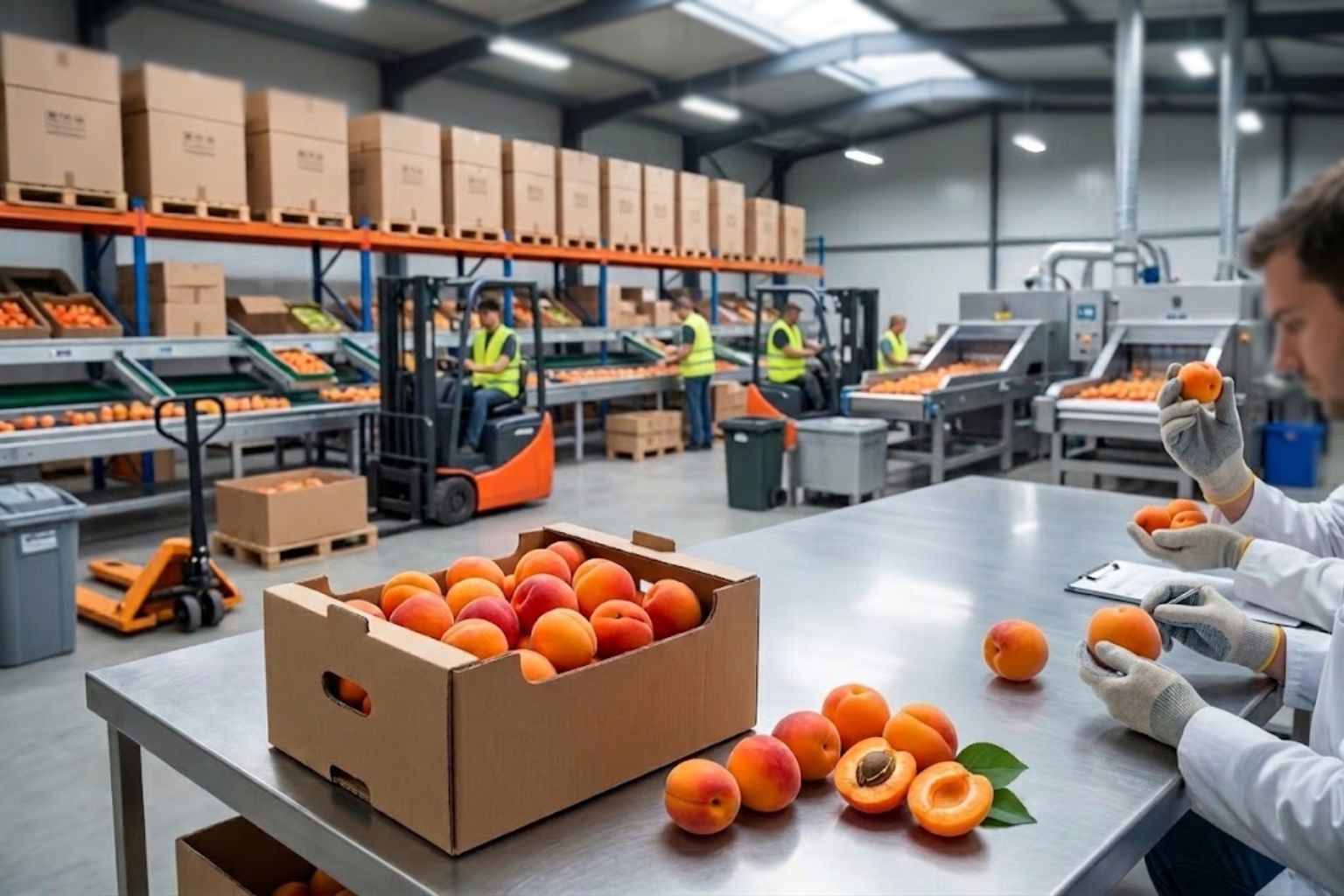
The real test of an apricot program is not how the fruit looks in a sample tray. It is how consistently it lands, holds, and sells across repeated shipments. For any buyer evaluating an apricot supplier for importers, the decision goes far beyond price per carton. It is about reducing risk in a product category where timing, firmness, sizing, and handling make the difference between margin and claims.
Fresh apricots are commercially attractive because they combine short seasonal windows with strong consumer appeal. They are also unforgiving. A shipment that leaves in excellent condition can lose value quickly if harvest timing is off, pre-cooling is delayed, grading is inconsistent, or packaging is not matched to the route and customer profile. That is why serious importers do not simply source fruit. They qualify supply partners.
What importers should expect from an apricot supplier
A reliable apricot supplier for importers must offer more than availability. The foundation is control. That starts in the field, continues through selection and packing, and ends only when the fruit is loaded under the right conditions with full lot visibility.
For B2B buyers, consistency matters more than one exceptional shipment. Retailers, wholesalers, and foodservice distributors build programs around predictability. They need fruit that arrives with the agreed maturity, appearance, and shelf-life profile, not fruit that changes character from lot to lot. The supplier's ability to maintain standards across the season is often a stronger indicator of value than a lower opening quote.
This is where production proximity and disciplined sourcing matter. Suppliers with direct access to orchards or structured relationships with selected growers are in a better position to manage harvest windows, monitor crop development, and sort fruit according to market specifications. A trader can move volume. A structured exporter can protect a program.
Quality starts before packing
Apricot quality is shaped early. Variety selection, orchard practices, crop load, weather patterns, and harvest decisions all influence the final commercial result. Importers may not need to manage those variables themselves, but they do need a supplier who does.
A common mistake in procurement is to treat apricots as interchangeable by origin alone. Country of origin matters, but so do region, variety, seasonal timing, and intended market use. Fruit for a premium retail shelf requires a different selection profile than fruit destined for a wholesale market with faster turnover. Color development, firmness, brix potential, and skin finish need to align with the sales channel.
That is why the strongest suppliers build quality from the orchard outward. They monitor maturity carefully, avoid harvesting fruit that is either too green or too advanced, and apply strict sorting before packing. Premium quality is not a slogan in this category. It is the result of controlled decisions, repeated every day of the season.
Why harvest timing is a commercial issue
Apricots harvested too early may travel better at first glance, but they often disappoint at destination with weak flavor and poor eating quality. Fruit harvested too late may show attractive color yet carry higher risk in transit and shorter market life. Neither outcome supports repeat business.
Experienced importers know that the best supplier is not the one who simply picks to fill an order quickly. It is the one who understands the required balance between transport resistance and consumer-ready quality. That balance changes depending on transit time, destination climate, packaging format, and final customer expectations.
Traceability and documentation are not optional
In international fruit trade, traceability is part of the product. Buyers need to know where the fruit came from, how it was packed, and which lot corresponds to each shipment. This is essential for food safety compliance, claim management, and retailer confidence.
A dependable supplier should be able to provide clear lot identification, packing details, and supporting export documentation without delay. When documentation is incomplete or disconnected from the physical shipment, commercial risk rises immediately. Delays at destination, disputes over quality, and compliance issues often begin with administrative weakness rather than product weakness.
For importers serving organized retail or professional distribution networks, international standards are part of the baseline. The supplier should operate with a process mindset, not an ad hoc approach. That includes disciplined quality control, packing accuracy, and shipment readiness aligned with customer specifications.
Packing consistency protects value
Packing is often underestimated until problems appear. In apricots, carton strength, internal presentation, ventilation, net weight accuracy, and pack uniformity all affect saleability. Even strong fruit can lose commercial value if the presentation is inconsistent or the packaging does not support the route.
Importers should look closely at whether the supplier can adapt packing to the market. A wholesale buyer may prioritize functional packaging and cost efficiency. A retail customer may require more refined presentation, specific sizing alignment, labeling precision, and shelf-ready formats. The right supplier understands that packaging is not just a logistics detail. It is part of the commercial offer.
Consistency here matters because buyers are rarely evaluating one pallet in isolation. They are managing customer expectations across multiple deliveries. Mixed sizing, uneven color, or weak carton performance can create downstream handling issues, shrink, and reputational damage.
Logistics discipline is part of product quality
Apricots are highly sensitive to delays and temperature variation. This makes cold-chain management central to importer satisfaction. A shipment packed well but cooled poorly is still a risk. Likewise, fruit that is harvested properly but loaded late can arrive with diminished firmness and reduced shelf life.
A qualified apricot supplier for importers should understand logistics as an extension of quality management. Pre-cooling, loading discipline, temperature maintenance, and route planning all matter. So does honest communication. If a timing issue emerges, importers need immediate visibility so they can adjust receiving plans, customer commitments, or market strategy.
There is also a practical trade-off to consider. The fastest logistics option is not always the most economical, and the lowest freight cost is not always commercially wise for a sensitive fresh product. The right supply partner helps buyers choose the route and packing profile that fit the actual market objective.
Why communication affects claims
Many claims become more costly because issues are identified too late. If a supplier communicates clearly on harvest dates, loading status, pack details, and any deviation from spec, importers can make better decisions before the fruit reaches the market. Silence creates friction. Structured communication supports long-term business.
What makes Greek apricots attractive in global trade
Greek fruit has a strong position in international markets because buyers associate it with freshness, Mediterranean growing conditions, and competitive seasonal opportunities. In apricots specifically, Greece offers commercial relevance when supply is backed by careful selection, modern packing, and export discipline.
That last point matters. Origin alone does not guarantee performance. The commercial advantage comes when Greek apricots are handled by a supplier that combines production access, strict sorting, standardized packing, and reliable export execution. This is where companies such as ELYSIAN FRUIT can create value for importers who prioritize premium quality, traceability, and dependable supply.
For many buyers, the appeal of a Greek program is the combination of flavor potential and professional shipment management. When those two factors are aligned, the product is well positioned for wholesale markets, retail chains, and specialized distributors seeking differentiated fresh fruit with stable presentation.
How to assess an apricot supplier for importers
A serious supplier evaluation should focus on operational proof, not sales language. Ask how the fruit is sourced, how maturity is checked, how lots are graded, and how packing specs are controlled. Review whether the supplier can adapt to different customer programs while maintaining uniformity. Most importantly, assess responsiveness under pressure, because produce trade is rarely judged on easy weeks.
It also helps to understand seasonal capacity honestly. A supplier promising unlimited flexibility in a short and sensitive product window may not be giving a realistic picture. Strong partners set clear expectations on volumes, timing, and specification feasibility. That transparency is a sign of control, not limitation.
Price, of course, remains relevant. But in apricots, the cheapest offer can become the most expensive if it leads to claims, weak arrivals, or inconsistent shelf performance. Importers generally gain more from a supplier who protects the full commercial result than from one who competes only at invoice level.
Long-term value comes from repeatable performance
The best apricot supply relationships are built season after season. Importers need partners who understand that each shipment affects the next negotiation, the next retail review, and the next market opening. Reliability creates room for growth. Inconsistency creates constant reset.
That is why experienced buyers tend to stay with suppliers who combine field knowledge, quality control, traceability, disciplined packing, and dependable logistics. These are not separate advantages. Together, they form the basis of a program that can scale with confidence.
When apricots are sourced with that level of control, the conversation shifts. It stops being about whether the load will arrive in acceptable condition and becomes about how to build stronger, more profitable business around a fruit category that rewards precision.







Comments