
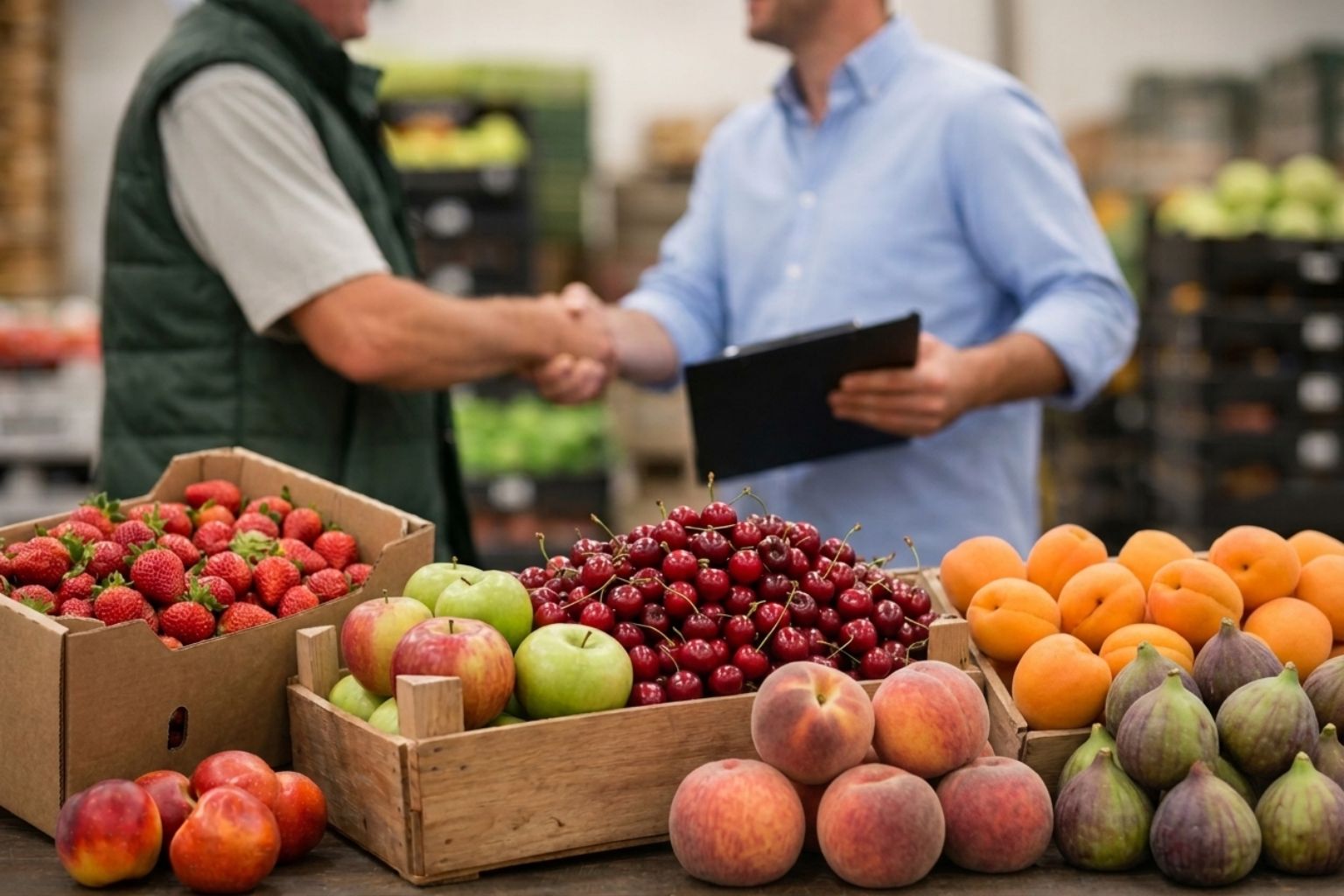
A missed delivery window on fresh fruit is rarely just a logistics issue. For importers, distributors, retailers, and foodservice buyers, it quickly becomes a margin issue, a shelf-life issue, and often a reputation issue. That is why selecting the right fresh fruit wholesale supplier is not a routine purchasing decision. It is a strategic choice that affects product performance, customer trust, and long-term commercial stability.
In wholesale fruit trade, price always matters, but price alone does not protect a program. What protects it is consistency across harvests, disciplined sorting, reliable packing, clear specifications, and a supply partner that understands what happens after the pallet leaves the facility. A supplier serving professional B2B buyers must be able to think beyond sales volume and work with the standards of modern trade.
What defines a reliable fresh fruit wholesale supplier
A reliable supplier is not simply a company that has fruit available when the season starts. Availability is the baseline. The stronger indicator is control. Buyers need to know how fruit is sourced, how lots are selected, what quality checks are applied, and how product condition is protected through packing and transport.
This is especially relevant in categories where visual quality and eating quality must align. A shipment may look acceptable at loading and still underperform if maturity was not assessed correctly, if sorting lacked discipline, or if cold chain handling was inconsistent. For that reason, serious buyers tend to favor suppliers with direct production involvement or strong relationships with selected growers, rather than purely transactional traders with limited visibility into origin.
The difference becomes even more visible in export business. International markets do not reward improvisation. They reward suppliers who can manage specifications with precision, document traceability, and maintain stable quality from one load to the next.
Why origin and production access matter
Greek fruit holds a strong position in many international markets for a reason. Climatic conditions, growing know-how, and varietal diversity create strong potential for premium quality across cherries, apricots, plums, nectarines, kiwifruit, chestnuts, persimmons, strawberries, oranges, apples, and peaches. But potential at origin is only part of the equation. Commercial value depends on how that fruit is selected and presented to market.
A supplier with real access to production has an operational advantage. It can coordinate harvest timing more accurately, apply selection criteria closer to origin, and respond faster when market requirements change. This matters when buyers need specific sizing, pack styles, or quality profiles for different channels.
It also reduces one of the most common risks in wholesale purchasing - inconsistency between samples and actual deliveries. When the supplier is close to the field and involved in the production chain, there is less room for disconnect between what is promised and what is loaded.
Quality control is not a slogan
For professional buyers, quality control should be visible in process, not just in marketing language. A credible wholesale partner should be able to explain how fruit is graded, how defects are monitored, how uniformity is maintained, and how packing standards are enforced.
This is where premium positioning is either supported or exposed. Premium quality is not only about selecting the best-looking fruit. It is about repeatable standards. Uniform size, color, firmness, and maturity are not cosmetic details. They influence sell-through, waste, claims, and customer satisfaction.
Different markets also define quality differently. A supermarket program may require tighter visual uniformity and stricter packaging discipline. A wholesale market customer may prioritize flavor, freshness, and flexible sizing. A capable supplier understands these differences and adjusts the packhouse process accordingly, without compromising product integrity.
Freshness depends on timing, handling, and discipline
Freshness is often treated as a simple promise, yet in wholesale fruit it is an operational result. It starts with correct harvest timing and continues through sorting, pre-cooling, packing, storage, and transportation. Weakness in any one of these stages can shorten shelf life and reduce commercial value.
This is why experienced buyers ask detailed questions about post-harvest handling, not just product availability. Fruit that is harvested too early may travel well but disappoint at destination. Fruit harvested too late may offer attractive eating quality and still become risky for longer routes. The right balance depends on variety, destination, transit time, and channel.
A serious supplier works within those variables rather than ignoring them. It aligns harvest and packing decisions with the realities of each order. That level of attention can make a measurable difference in shrink, claims, and repeat business.
The role of traceability in risk reduction
Traceability has moved from added value to basic expectation. In B2B trade, especially across international markets, buyers need confidence that each lot can be tracked clearly and quickly. This supports food safety, simplifies documentation, and helps resolve issues without delay.
But traceability also has commercial value. It signals process maturity. A supplier with strong traceability usually has stronger internal control overall, because traceability requires discipline in sourcing, batch management, packing records, and shipment coordination.
For buyers, that means lower exposure. If a specification issue appears, the source can be identified faster. If a customer requests origin details or handling information, the response can be immediate and documented. In high-pressure distribution environments, that is not a minor advantage.
Packaging and standardization shape market performance
Packaging is sometimes underestimated in procurement discussions, yet it affects both product protection and brand presentation. In wholesale and export channels, standardized packing helps maintain consistency, improves loading efficiency, and supports better handling throughout the supply chain.
The right packaging format depends on the market. Retail-focused programs may require stronger visual presentation and exact unit configuration. Wholesale channels may prioritize stackability, ventilation, and transit resilience. A professional supplier should be comfortable working within those parameters while keeping fruit condition at the center.
Standardization matters just as much. Buyers operating across multiple loads and recurring programs need predictable pack execution. Inconsistent labeling, variable pallet building, or irregular carton quality can create avoidable friction even when the fruit itself is acceptable. Reliable suppliers understand that professionalism is judged at every level.
Evaluating a fresh fruit wholesale supplier for export markets
When fruit is destined for international trade, the evaluation criteria become stricter. Buyers need a supplier that can combine product quality with export readiness. That includes documentation, operational responsiveness, packaging compliance, and transport coordination.
The practical question is not whether a supplier can ship abroad once. It is whether the supplier can support ongoing business with consistency. Export markets reward partners who can handle recurring demand, adapt to market-specific needs, and maintain premium quality under time pressure.
A dependable export supplier usually demonstrates a few clear strengths. First, it has disciplined sourcing and selection. Second, it works with international standards in packing and quality control. Third, it communicates with speed and precision when schedules, specs, or market conditions change.
That last point matters more than many buyers admit. Fresh produce is a category where conditions shift fast. Weather, yields, transit constraints, and destination demand can all affect execution. Buyers do not expect perfection in every variable. They do expect transparency, fast decisions, and professional communication.
What long-term buyers look for
The most valuable supplier relationships in wholesale fruit are built on predictability. Buyers want to know that standards will hold, that commitments will be respected, and that issues will be handled before they become losses.
That does not mean every season is identical. Agriculture does not work that way. There are natural variations, and experienced buyers understand this. What matters is how a supplier manages those variations. Does it communicate early? Does it protect agreed specifications? Does it offer realistic solutions instead of optimistic promises?
This is where a company such as ELYSIAN FRUIT can stand apart in competitive markets. A model built around selected production, strict sorting, standardized packing, traceability, and safe transportation speaks directly to the priorities of serious B2B buyers. It supports not only product quality, but also commercial confidence.
Long-term partnerships are rarely won by the cheapest offer on a single load. They are won by reducing uncertainty over time. When a supplier consistently delivers fresh Greek fruit with premium quality, organized execution, and respect for international requirements, it becomes more than a vendor. It becomes part of the buyer's operating stability.
The best time to assess a supplier is before the pressure of peak season. Ask how fruit is sourced. Ask how lots are controlled. Ask how freshness is protected and how traceability is documented. The answers will tell you whether you are buying fruit only, or securing a supply partner built for serious trade.




Comments