
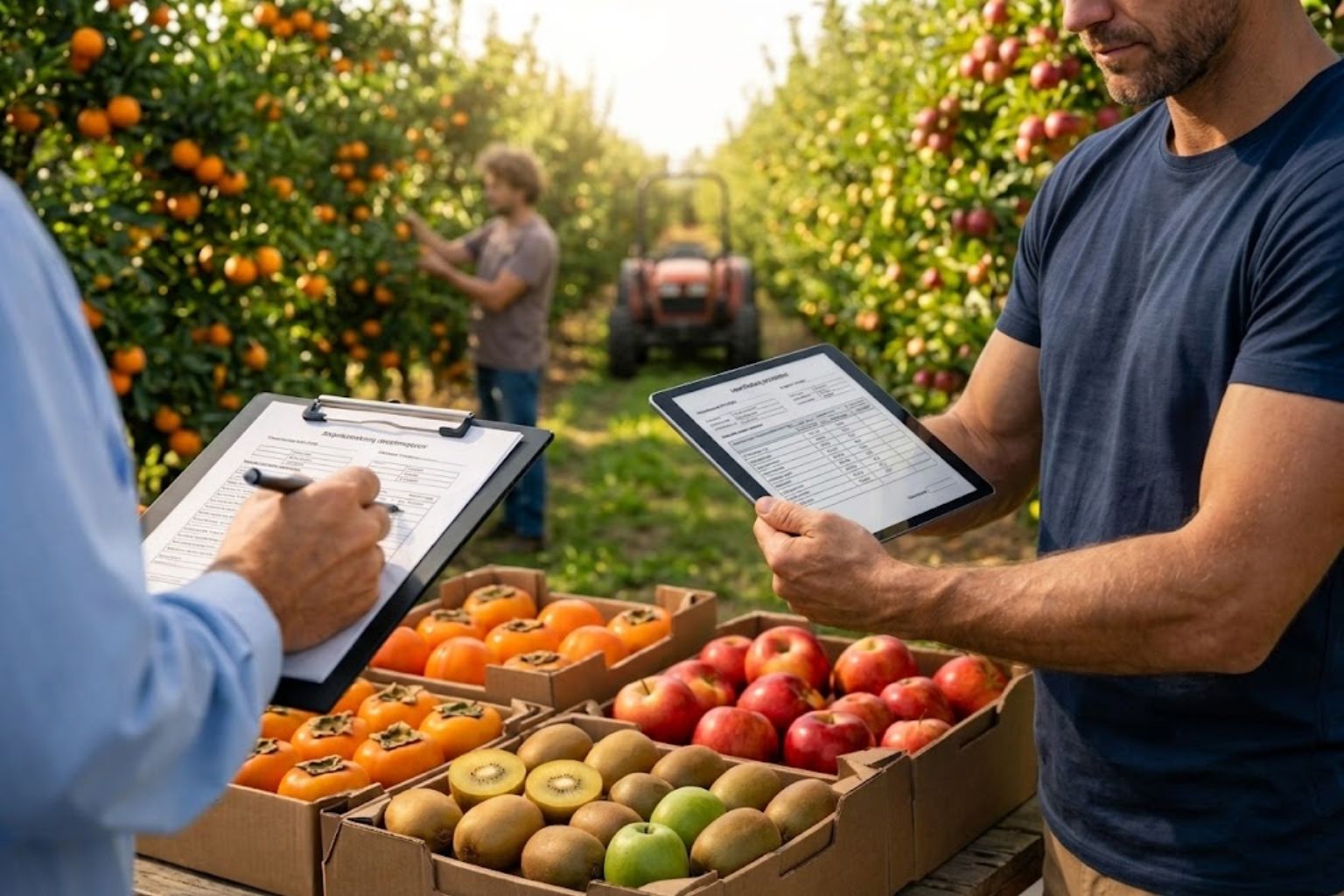
A shipment can look perfect on paper and still fail where it matters most - at arrival, on shelf, or in your customer complaint log. That is why knowing how to verify fruit export partners is not a formality for importers, wholesalers, and retail buyers. It is a commercial control process that protects margin, continuity, and brand reputation.
In fresh produce, risk rarely comes from one dramatic mistake. More often, it builds through small gaps: weak lot consistency, unclear origin records, overpromised transit windows, packaging that does not hold, or quality standards that sound strong but are not applied consistently. A serious export partner should be able to prove performance across the full chain, from orchard selection to final delivery.
How to verify fruit export partners before first orders
The first check is simple: determine whether you are dealing with a trader, a sourcing intermediary, or an export partner with real operational control. The difference matters. A company that is close to production and manages grading, packing, and dispatch can usually offer stronger oversight, better traceability, and faster problem resolution than one that mainly brokers availability.
Start by assessing operational substance. Ask how fruit is sourced, how growers are selected, how batches are inspected, and who controls packing specifications. Strong partners answer with clarity. They explain their process in commercial terms and in technical terms. Weak partners stay general, rely on sales language, or move quickly to price before proving capability.
A credible exporter should also show familiarity with your market requirements. That includes retail specifications, import documentation, labeling expectations, cold chain discipline, and tolerance thresholds for defects. Not every buyer needs the same format or spec. A wholesaler may prioritize flexibility and speed, while a supermarket program may require strict uniformity and documented compliance. Verification is not only about whether a supplier exports fruit. It is about whether they can export fruit correctly for your channel.
Verify quality systems, not just product samples
Samples matter, but samples can mislead if they are treated as isolated showcases. The better question is whether the exporter has a repeatable quality system. You are not buying one attractive box. You are buying consistency across lots, weeks, and loading schedules.
Ask how quality is checked at intake, during sorting, before packing, and before loading. A serious partner should be able to describe grading criteria, defect thresholds, maturity controls, sizing standards, and packaging checks. If the answer is vague, the risk is not only lower quality. The risk is inconsistency, which is often more damaging in B2B trade than one clearly rejected lot.
Traceability is equally important. Each pallet, lot, or shipment should connect back to source, packing date, and handling records. If an issue appears on arrival, you need a chain of evidence, not assumptions. Exporters who invest in traceability tend to perform better overall because they are operating with process discipline, not improvisation.
This is one area where premium suppliers distinguish themselves. They do not treat quality as a final inspection step. They build it through grower selection, field monitoring, sorting, standardization, and packing control. That approach reduces claims and supports long-term programs.
What to ask about certifications and compliance
Certifications should support trust, not replace verification. A valid certification framework is valuable because it signals that procedures exist and are reviewed. But buyers should still examine how those procedures work in practice.
Ask which certifications are current, which facilities are covered, and how product is managed under those standards. Also ask how residue compliance, food safety protocols, and customer-specific requirements are handled. An exporter serving multiple international markets should be comfortable discussing compliance in a detailed, operational way.
It also helps to confirm whether standards are applied uniformly across all growers and product categories. Some exporters are strong in one fruit line and less controlled in another. That does not automatically disqualify them, but it changes how you should structure purchasing and approval.
Assess logistics discipline and cold chain reliability
Fresh fruit exports are won or lost in execution. A supplier may pack excellent fruit, but if temperature management, loading coordination, or transit planning is weak, the product can deteriorate quickly. This is why logistics discipline is central when evaluating how to verify fruit export partners.
Ask how the cold chain is maintained from packing to dispatch. Clarify pre-cooling practices, loading procedures, temperature set points, and coordination with transport providers. If an exporter cannot explain these basics with confidence, you should expect greater variability on arrival quality.
Transit planning also deserves close attention. Reliable partners understand route realities, seasonal congestion, border timing, and the impact of delays on different fruit categories. Cherries, strawberries, kiwifruit, peaches, and citrus do not carry the same handling risk profile. The right exporter should adapt planning to the product, not apply one logistics model to everything.
Packaging is another operational checkpoint. Ask why a specific packaging format is recommended, how it performs in transit, and whether it matches your market's shelf or wholesale handling needs. Strong packaging is not only about appearance. It protects freshness, reduces mechanical damage, and supports commercial presentation.
Evaluate communication under pressure
Many suppliers communicate well when stock is available and timelines are easy. The real test is how they perform when harvest conditions shift, weather affects sizing, or transport windows tighten. This is where professional exporters separate themselves from opportunistic sellers.
Pay attention to response quality during the quoting and approval phase. Are specifications confirmed clearly? Are limitations stated early? Are potential risks discussed honestly? Reliable partners do not hide complexity to win an order. They define realistic ranges and update buyers before issues become claims.
You should also test how they handle documentation and pre-shipment coordination. In export trade, delays often come from incomplete or inconsistent paperwork. A disciplined partner should manage commercial invoices, packing lists, phytosanitary documents, and shipment data accurately and on time. Administrative precision is not separate from product quality. It is part of service quality.
Red flags that deserve caution
Some warning signs appear early. One is excessive emphasis on low price without equal discussion of grade, packing, transit, or claims handling. Another is inconsistency between what sales teams promise and what operations can document. A third is reluctance to provide lot detail, origin information, or recent shipment references.
There are also softer red flags. If communication becomes unclear when you ask technical questions, or if answers change from one conversation to the next, that usually points to weak internal control. In fresh produce, uncertainty at source tends to become cost at destination.
Check commercial reliability, not only technical capability
A fruit exporter can have good product and still be a poor partner if commercial discipline is weak. Verification should therefore include payment terms, order confirmation process, claim management, and planning stability.
Ask how volumes are allocated during peak demand periods and how the company protects existing customers when supply tightens. This matters more than many buyers expect. During difficult weeks, some suppliers chase spot opportunities and neglect program commitments. Others prioritize long-term relationships and communicate constraints with professionalism. If you are building recurring business, that distinction matters.
Claim handling should also be discussed before the first shipment. Serious partners do not promise zero issues, because fresh produce does not work that way. They explain how claims are documented, reviewed, and resolved. A mature process includes photos, temperature records, lot references, timing of notification, and a clear path to commercial adjustment where justified. That is a stronger sign of reliability than broad assurances.
Use a staged approval process
The safest way to verify a new exporter is not through one conversation or one sample. It is through staged commercial validation. Begin with documentation review and technical discussion. Move to sample evaluation where relevant. Then test with a controlled first shipment before expanding to larger or more sensitive programs.
This phased approach gives both sides room to align specifications, packaging, transit expectations, and reporting standards. It also reveals whether the exporter can repeat quality under normal commercial conditions. That is the benchmark that matters.
For professional buyers, site visibility adds value when possible. Seeing how intake, sorting, packing, and loading are managed can confirm whether the exporter operates with the structure they claim. Companies such as ELYSIAN FRUIT, with close connection to production, quality control, traceability, and export execution, are easier to assess because their value chain is visible and organized.
What strong fruit export partners consistently demonstrate
The best partners are not defined by polished presentations. They show control. They know their growers, their grades, their limits, and their markets. They document what they do, communicate early, and protect consistency shipment after shipment.
When you evaluate how to verify fruit export partners through that lens, the decision becomes clearer. You are not simply choosing a source of supply. You are choosing whether the fruit you buy will arrive with the quality, traceability, and commercial reliability your own customers expect. In fresh produce, trust is not built by claims. It is built by systems that hold up when the season gets demanding.







Comments